
Mold remediation
RESIDENTIAL
CATEGORY 3
Chronic moisture Terrace Park, OH
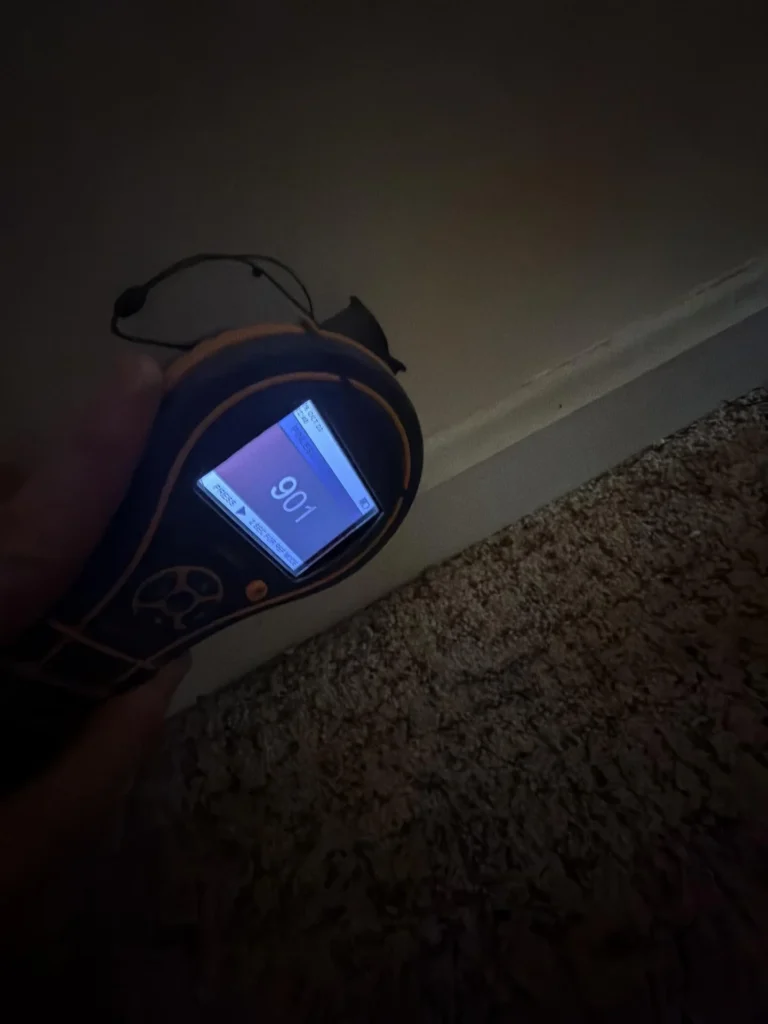
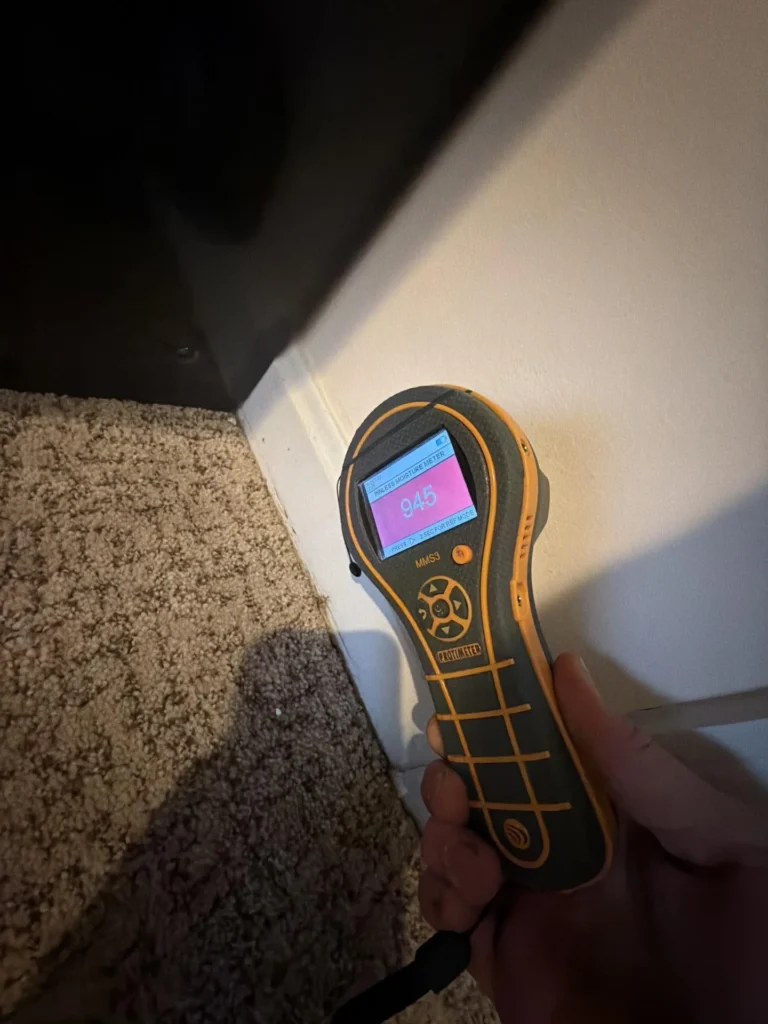
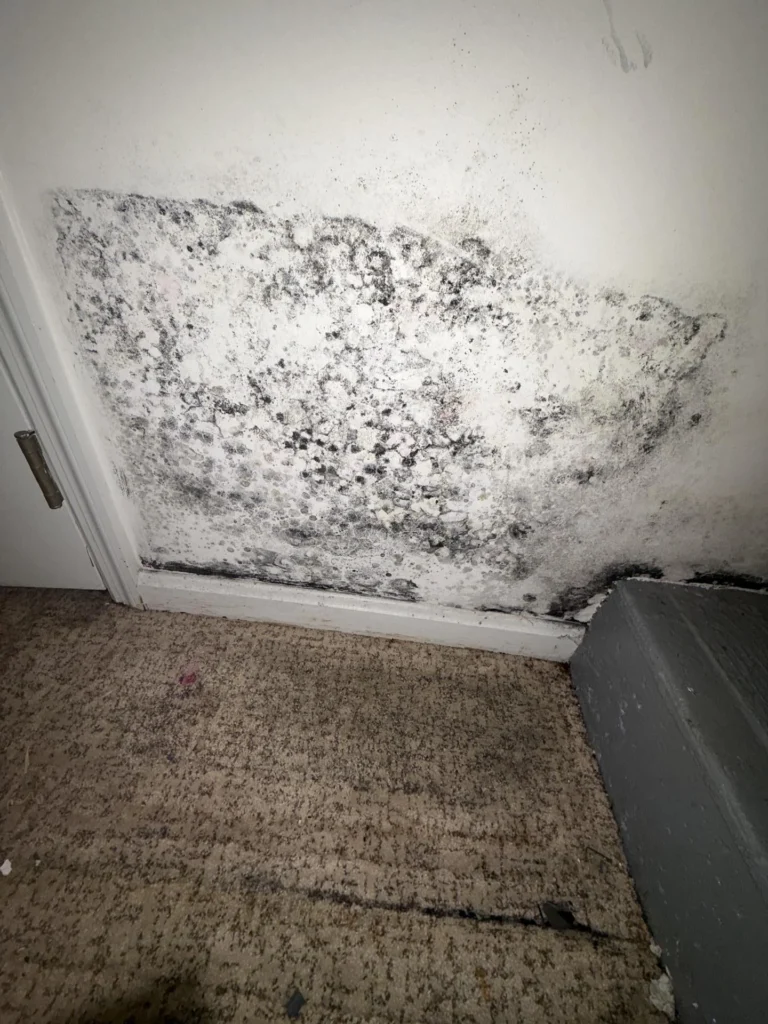
An unresolved moisture intrusion in the finished basement of this Terrace Park home had been feeding an active mold colony long enough for it to cover significant sections of wall near the baseboard line — with wall readings of 945 and 901 on the Protimeter MMS3 confirming the assembly was still deeply saturated at time of arrival. The mold had spread to multiple doorway and hallway wall surfaces. H2O Restoration established full remediation containment, documented the extent of affected material, and began the remediation protocol.
LOCATION
Terrace Park, OH
Loss type
Mold remediation
Peak moisture
945
Mold category
Active colony
PROJECT OVERVIEW
WHAT HAPPENED
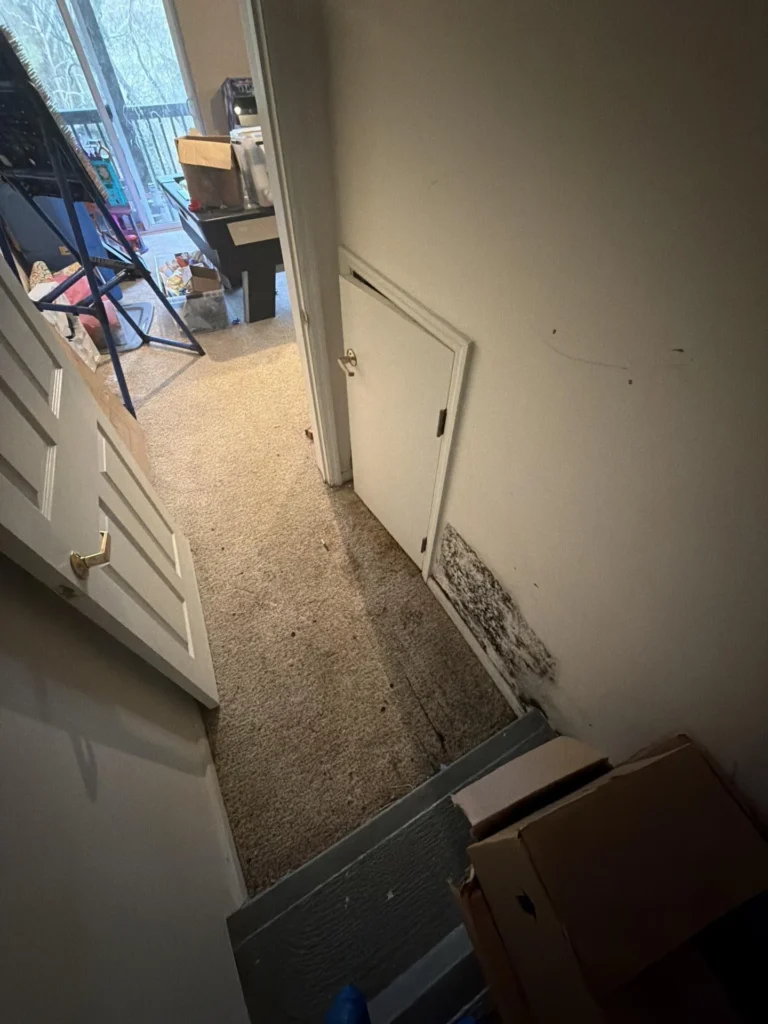
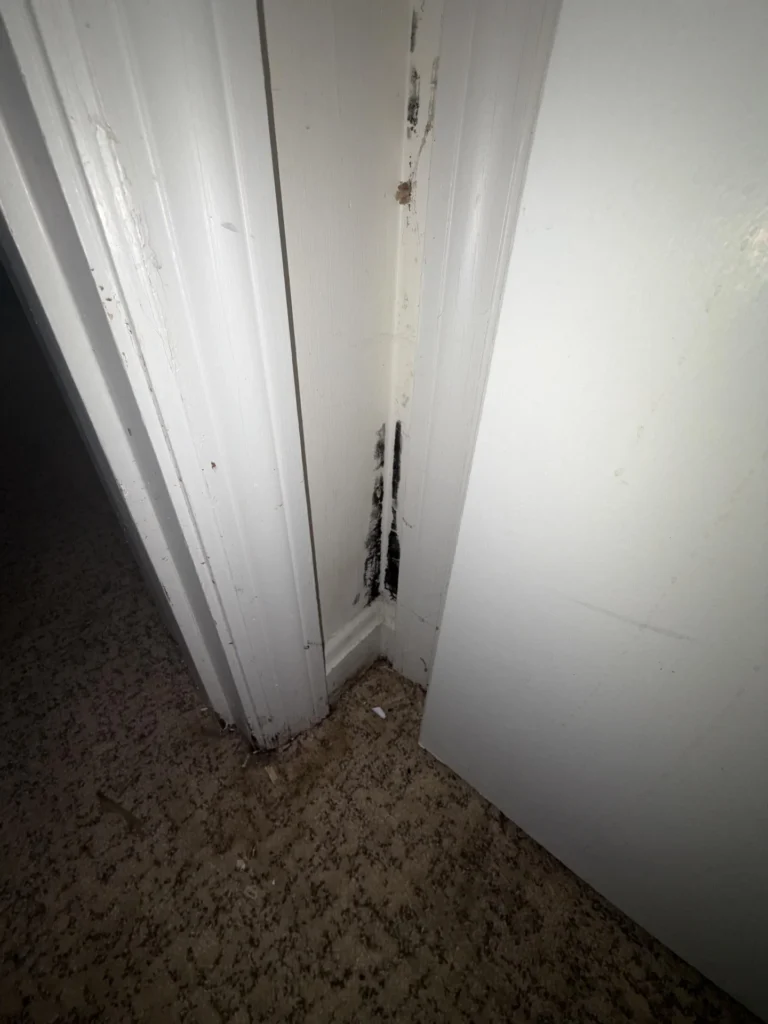
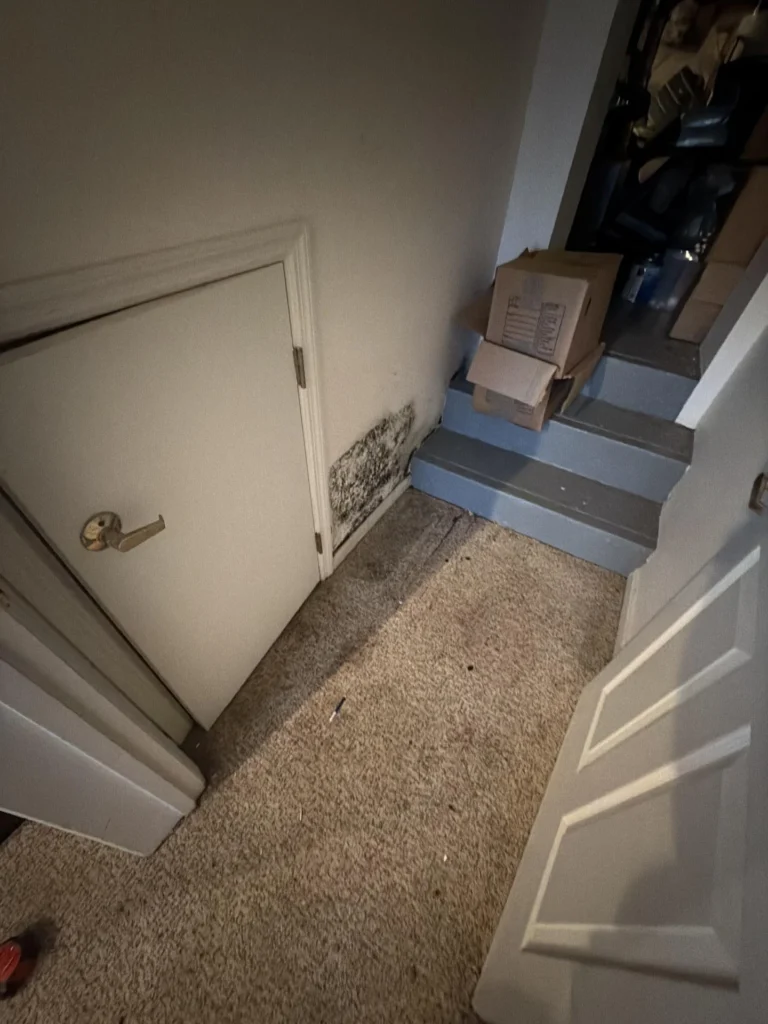
The finished basement of this Miami Avenue home had been experiencing moisture intrusion at the base of the walls — likely from a combination of chronic ground-level seepage and inadequate vapor management — for long enough that an active mold colony had fully established across multiple wall surfaces. The primary colony presented as a dense, extensive patch of black and white mold growth covering a large section of wall at floor level, with satellite growth appearing at door frames and along the baseboard line in the adjacent hallway. Protimeter MMS3 moisture readings taken at baseboard height returned 945 and 901 — both displayed on the device's alarm-level pink screen — confirming the wall assembly remained actively saturated. The basement floor plan (recreation room 27'1"×14'9", utility, bath, hall) represents an 829 ft² finished space, and the mold migration had tracked along the perimeter wall from the primary colony into the hallway corridor and doorway surrounds.
Wall moisture readings of 945 and 901 at arrival — displayed at alarm level on the Protimeter MMS3 — confirmed the assembly was still saturated, not simply showing mold from a past event that had since dried. An active moisture source was still feeding the colony at time of assessment. Remediation without source correction would result in recurrence.
JOB DETAILS
- Loss type
- Moisture source
- Colony type
- Primary location
- Secondary locations
- Total basement
- Insurance support
Affected spaces — from floor plan
- Recreation room
- Utility
- Bath
- Hall
- Primary mold zone
- Secondary mold zone
- Total
Equipment and services deployed
HEPA air scrubbers
Negative air pressure containment
Full poly containment barrier
Protimeter MMS3 — moisture mapping
Antimicrobial treatment
Affected drywall removal
Carpet and pad removal
HEPA vacuuming — all surfaces
On-site generator
JOB SITE IMAGES
A CLOSER LOOK AT THE DAMAGE
Put your HTML text here
Our process
Work completed
1
Mold assessment and moisture mapping
Full visual inspection of the basement perimeter walls, hallway, and all doorway surrounds. Protimeter MMS3 moisture readings taken at baseboard level across all affected zones — readings of 945 and 901 confirmed active saturation. The extent of visible mold growth was mapped and photographed. Growth at the hallway and door frame locations was documented as secondary migration from the primary colony.
2
Containment — negative air pressure established
Full poly containment barriers were erected to isolate the mold-affected areas of the basement from the rest of the home. HEPA air scrubbers were deployed under negative air pressure to prevent mold spore migration into unaffected spaces during demo and remediation. All HVAC vents in the work zone were sealed.
3
Full bathroom gut and kitchen ceiling removal
Carpet and pad in the primary mold zone were removed and double-bagged for disposal per mold remediation protocol. The affected drywall was cut back to the extent of visible growth plus a standard safety margin, with the framing behind exposed. All removed material was bagged in the work zone and removed through a dedicated exit path to avoid cross-contaminating clean areas.
4
HEPA vacuuming and surface treatment
All exposed framing, subfloor, and remaining wall surfaces in the work zone were HEPA vacuumed to remove surface mold particulate. Antimicrobial treatment was applied to all affected framing and concrete surfaces per remediation protocol. Secondary growth locations at the hallway wall and door surrounds were treated in place.
5
Source investigation and documentation
The active moisture source feeding the colony was investigated. Given the reading levels and the perimeter wall location, hydrostatic pressure and grade drainage were the primary candidates. Findings were documented and a source-correction recommendation was provided to the homeowner and the insurance adjuster as a prerequisite to reconstruction.
6
Clearance documentation and adjuster scope
Post-remediation documentation produced covering all work zones, before-and-after photos of all mold locations, moisture readings pre- and post-remediation, and the full scope of affected material removed. Reconstruction scope submitted covering drywall replacement, carpet replacement, and baseboard restoration — contingent on source correction verification.
H2O Restoration provides full remediation documentation, coordinates with the insurance adjuster, and flags source correction requirements clearly — so the reconstruction that follows doesn't undo the remediation work. We handle the full scope from assessment through rebuild.

We noticed the smell first, honestly, and then when we moved some things we saw how bad it actually was. I had no idea water had been getting in down there — we don't use that part of the basement much. They came out fast, explained exactly what was going on and why it kept coming back, and made sure the insurance company understood it too. It wasn't just about cleaning the mold — they made sure we knew what had to be fixed so it wouldn't happen again. Really appreciate that they treated us like adults and didn't just do the minimum.
Mold in your Greater Cincinnati home?
H2O Restoration handles mold assessment, full remediation, insurance documentation, and reconstruction across Greater Cincinnati, Northern Kentucky, and surrounding communities.
CALL: (513) 909-6540