
WATER DAMAGE
RESIDENTIAL
Category 2
Hidden Pipe Leak Causes Widespread Mold Cincinnati, OH
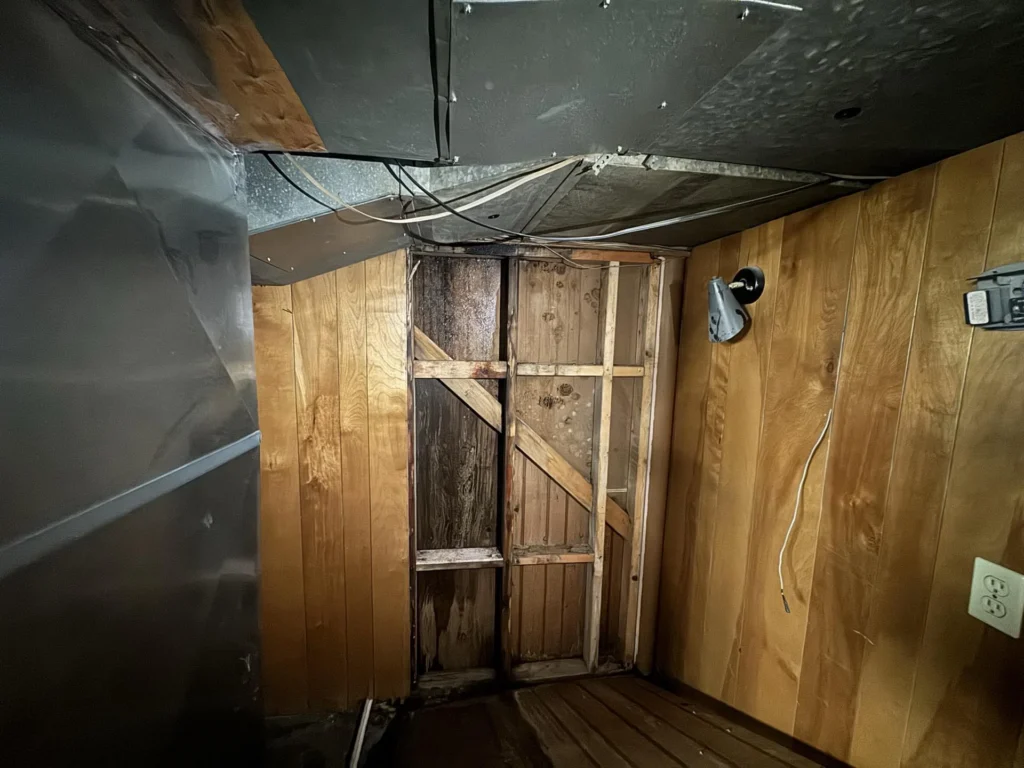
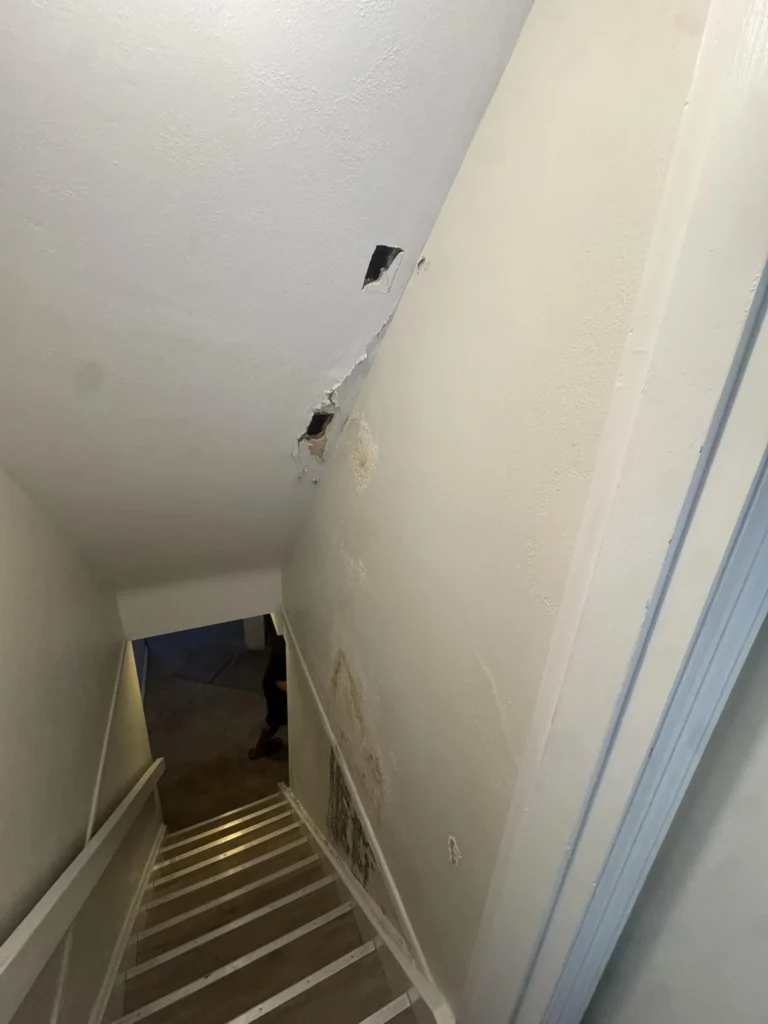
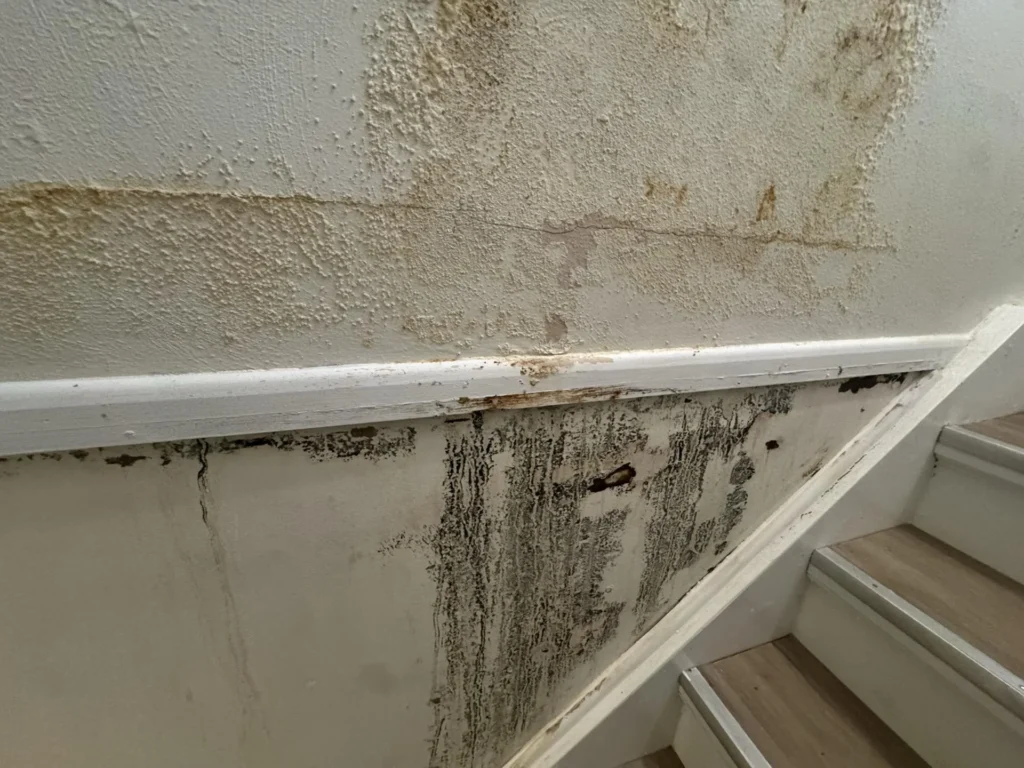
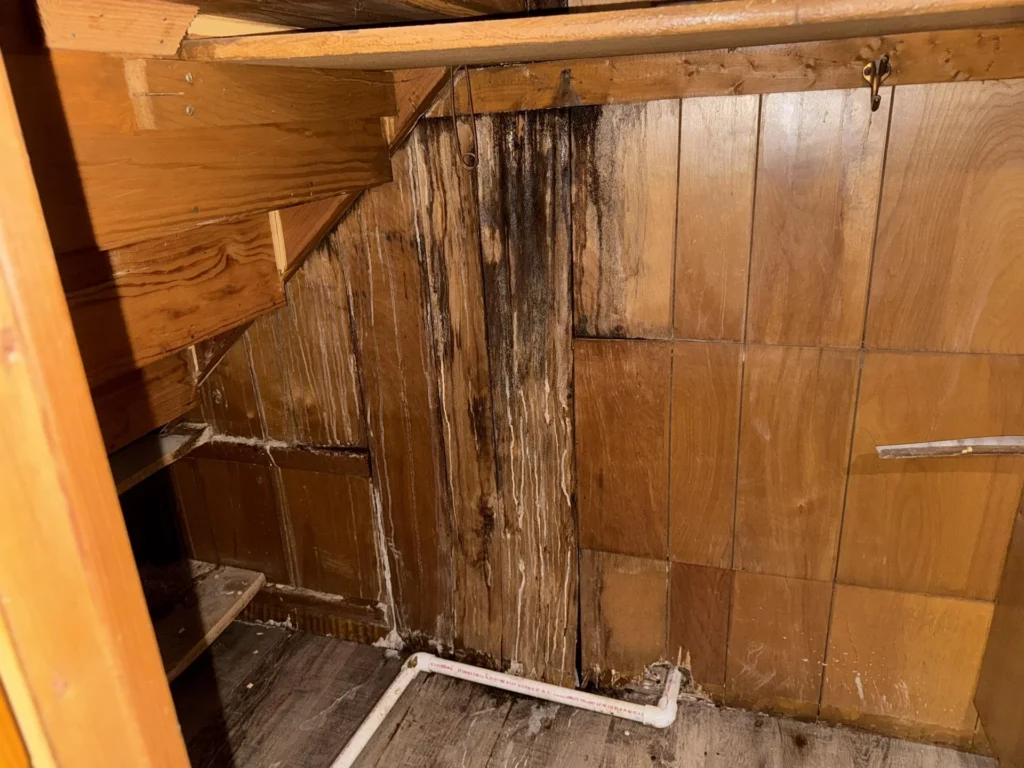
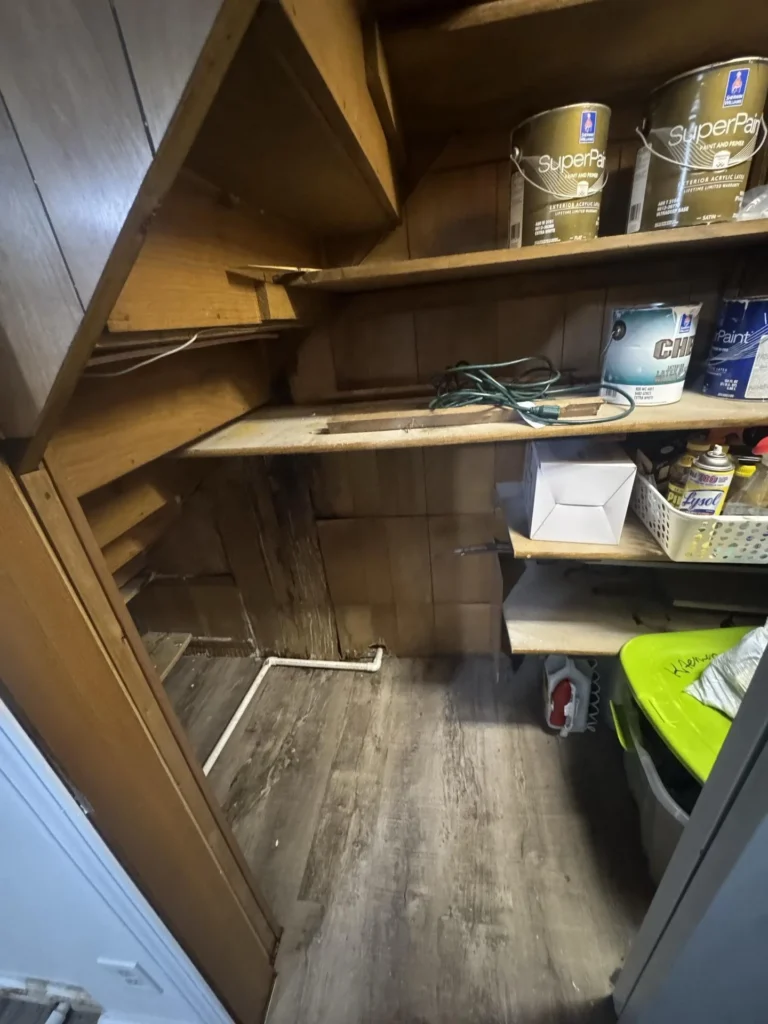
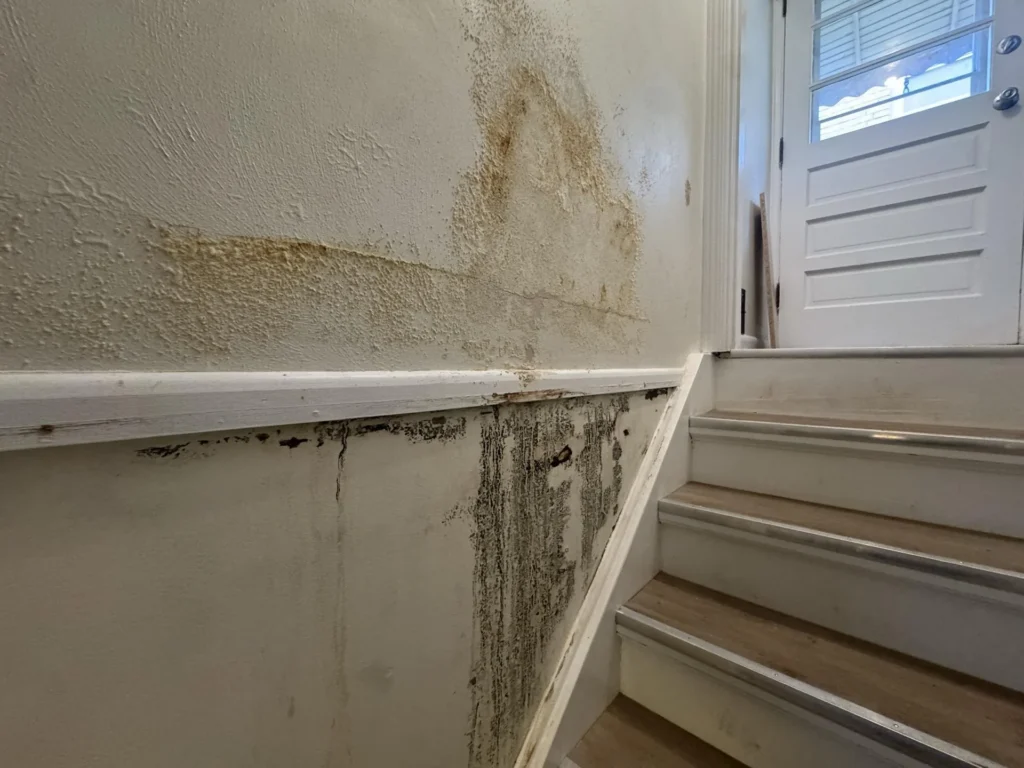
A slow leak inside an enclosed under-stair cavity went undetected long enough to saturate the surrounding wood paneling from floor to ceiling, breed extensive black mold across the rec room walls and under-stair structure, and push moisture up through the stairwell drywall — staining ceilings and triggering mold growth on stair walls all the way to the first floor landing. H2O Restoration performed full mold remediation, structural drying, and content documentation across the entire 764 sq ft basement footprint.
LOCATION
Cincinnati, OH
Total Affected Area
764 sq ft
CAUSE OF LOSS
Pipe Leak — Under Stairs
Water Category
Category 2
PROJECT OVERVIEW
WHAT HAPPENED
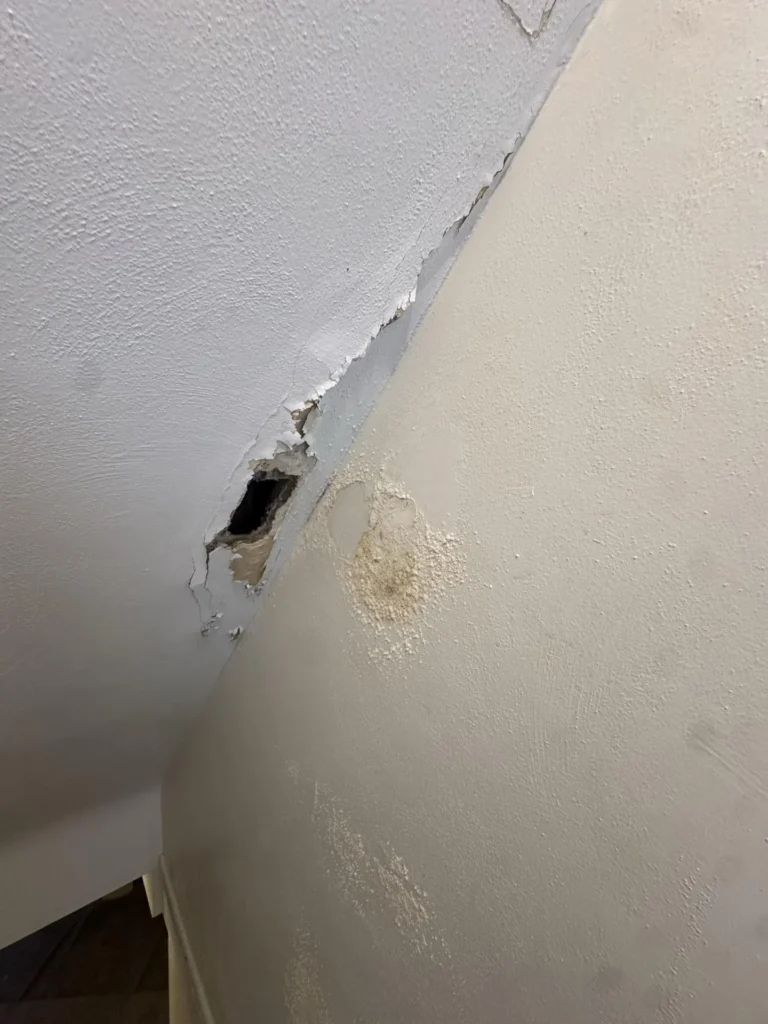
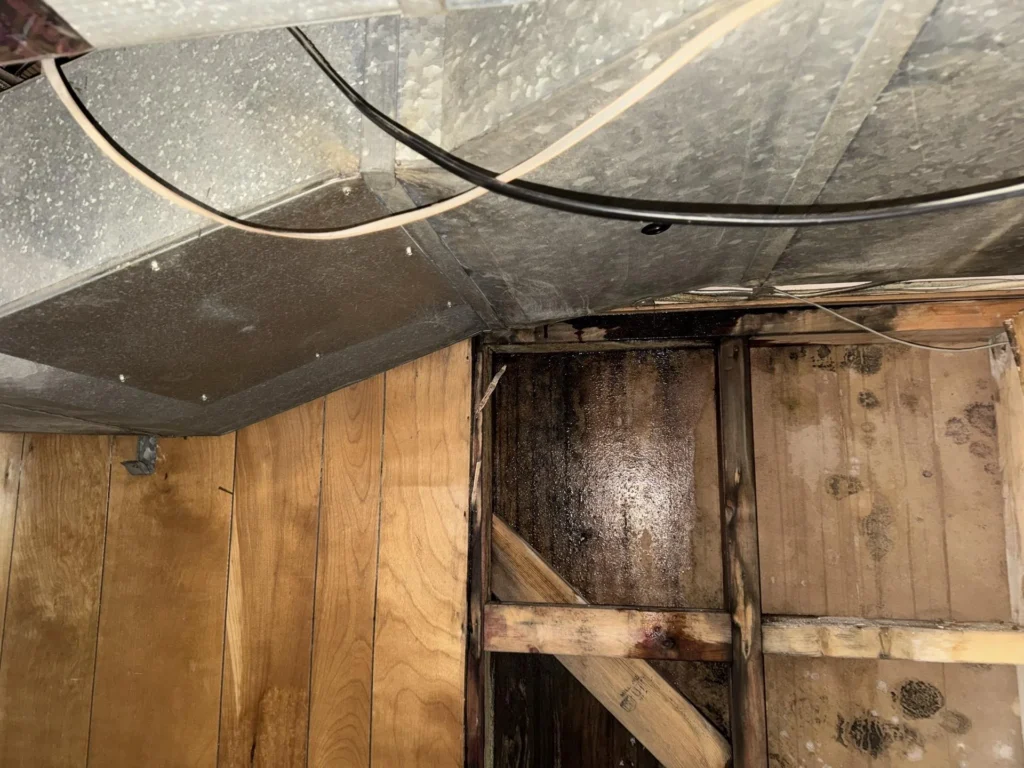
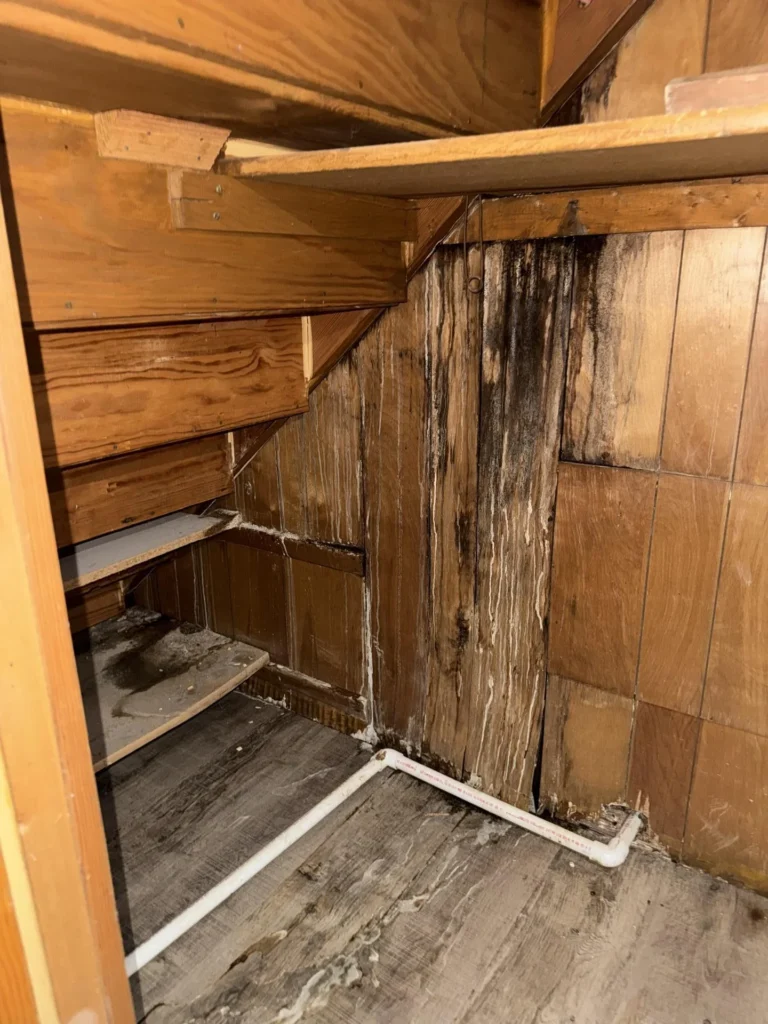
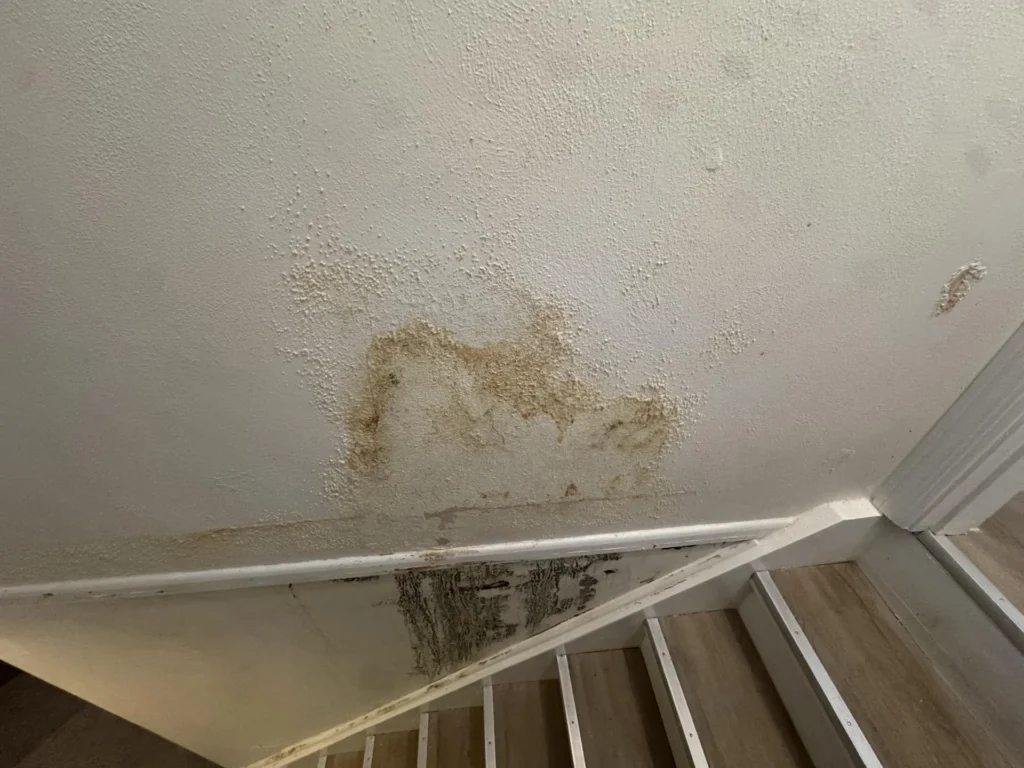
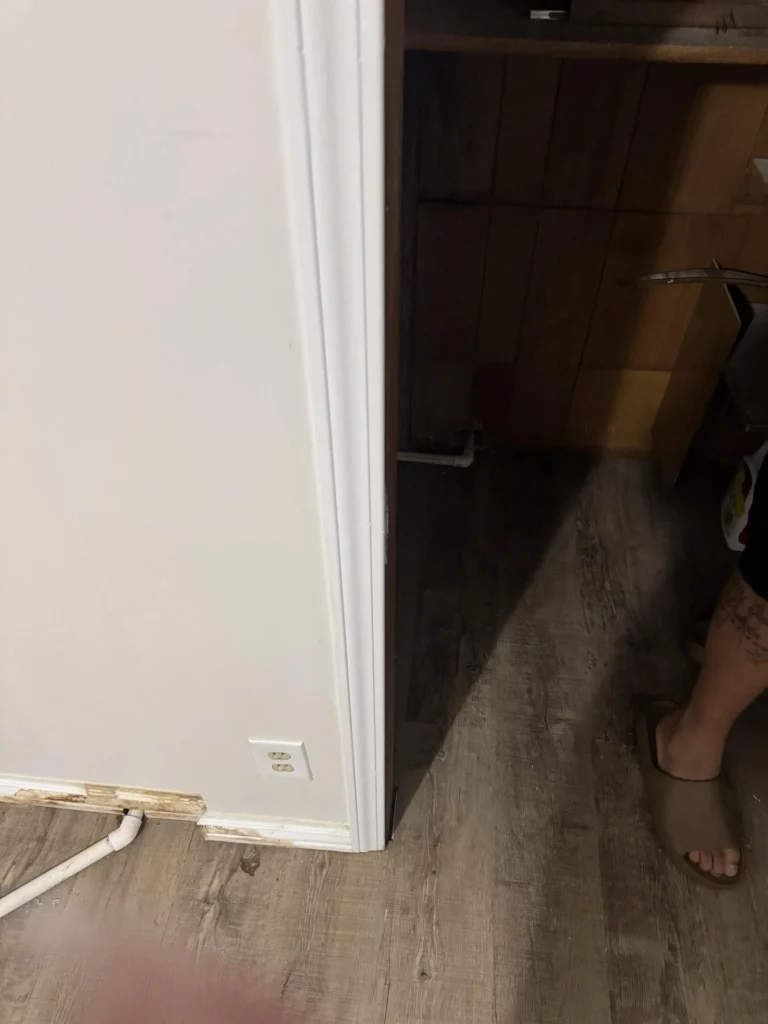
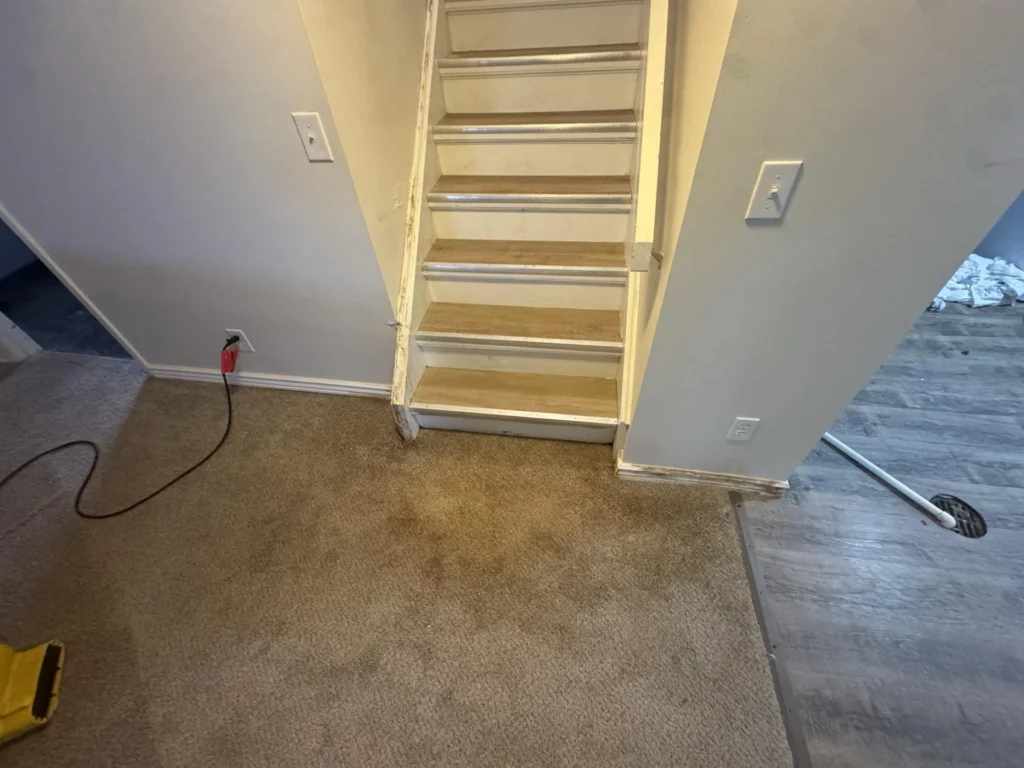
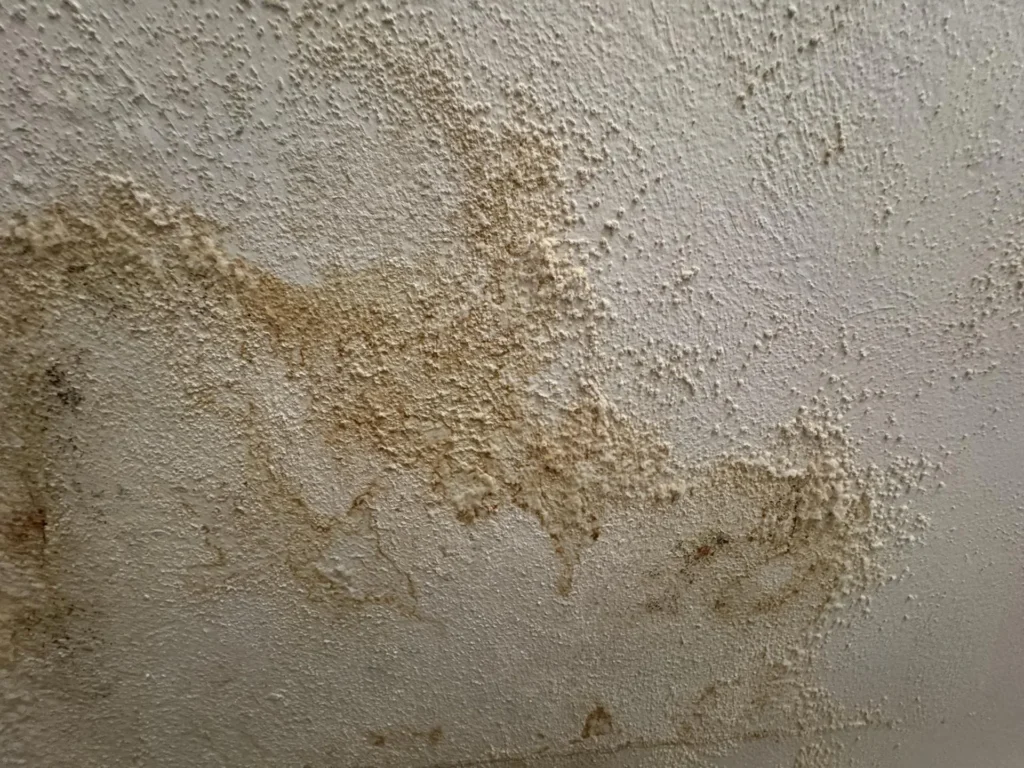
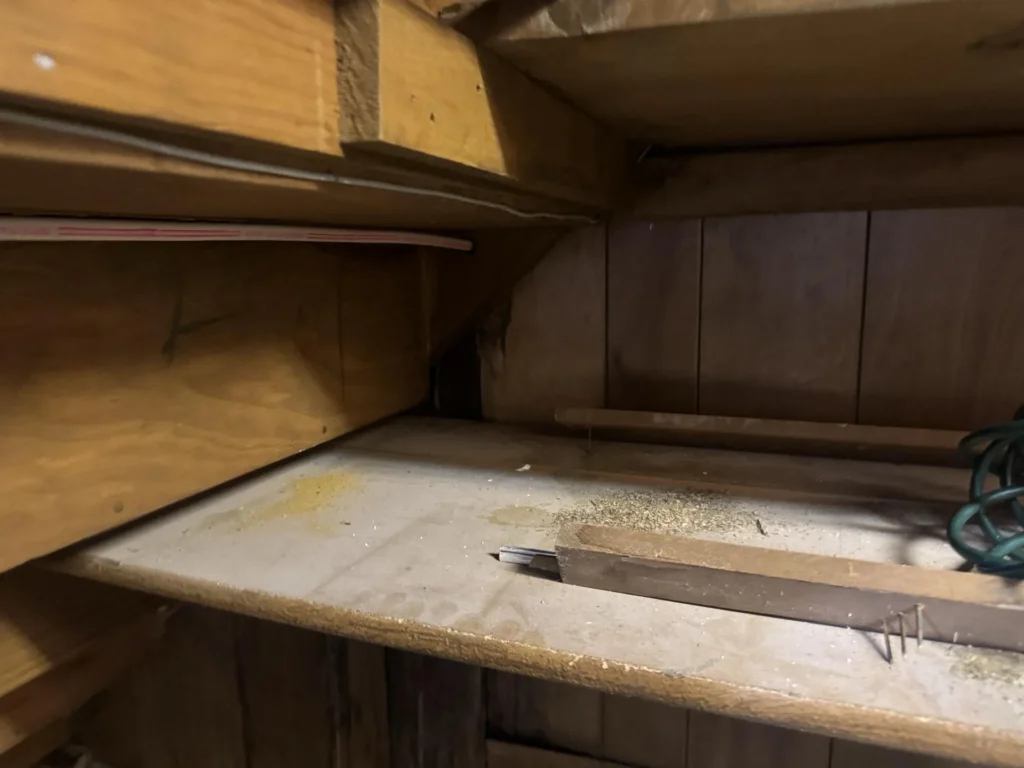
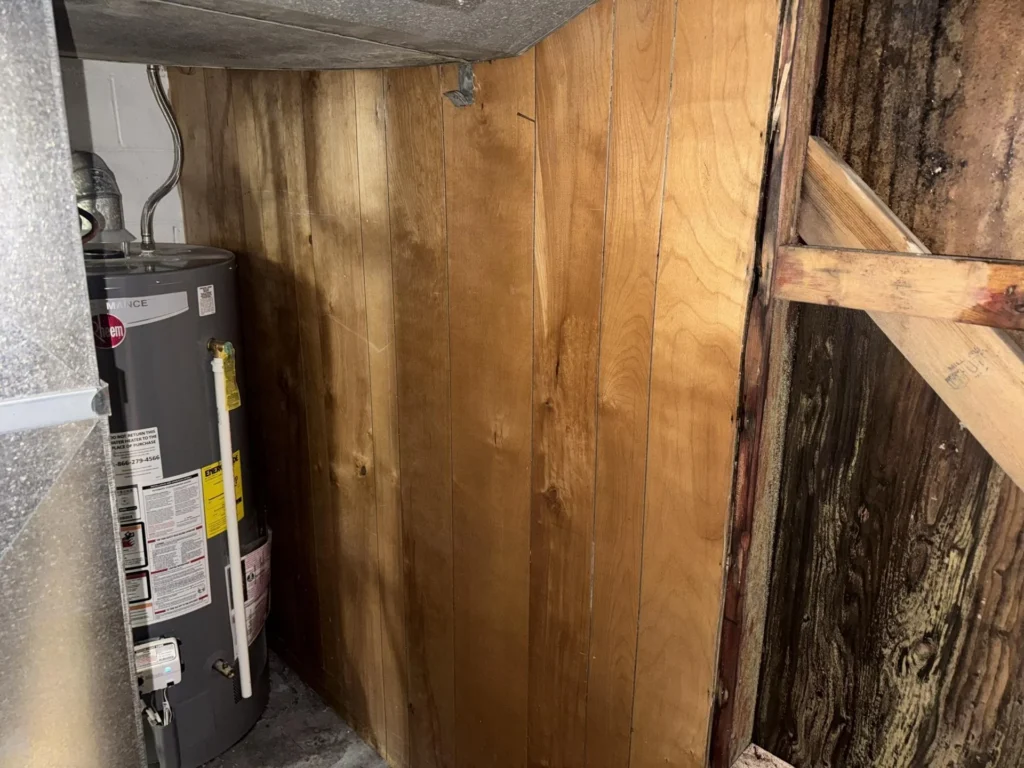
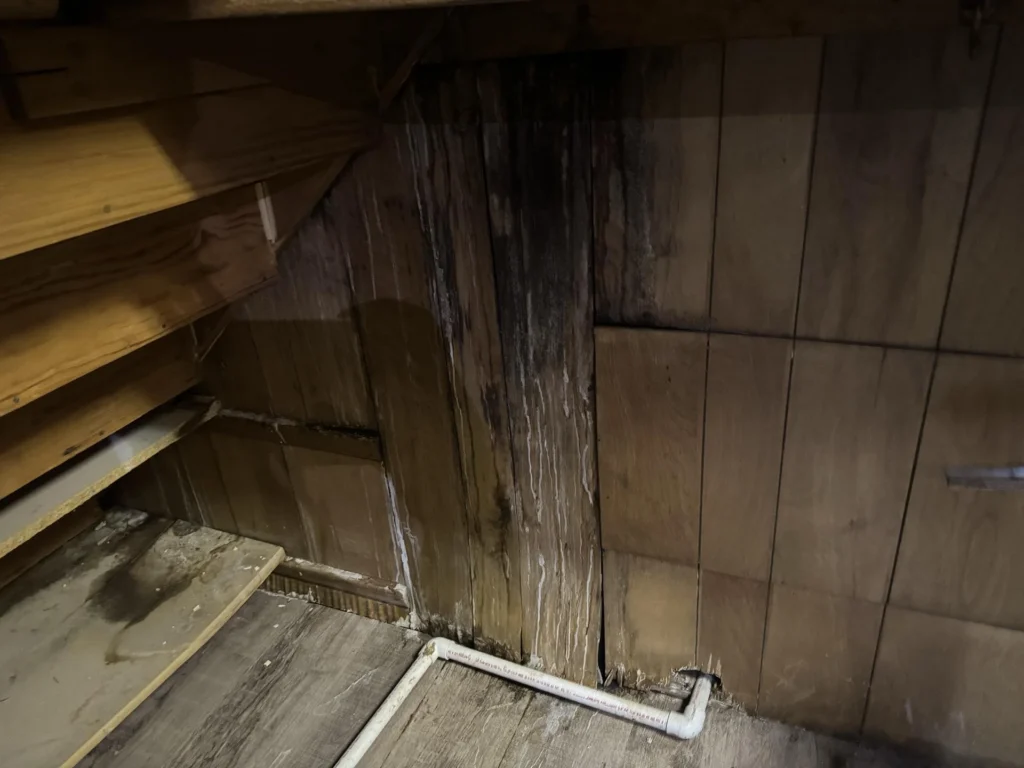
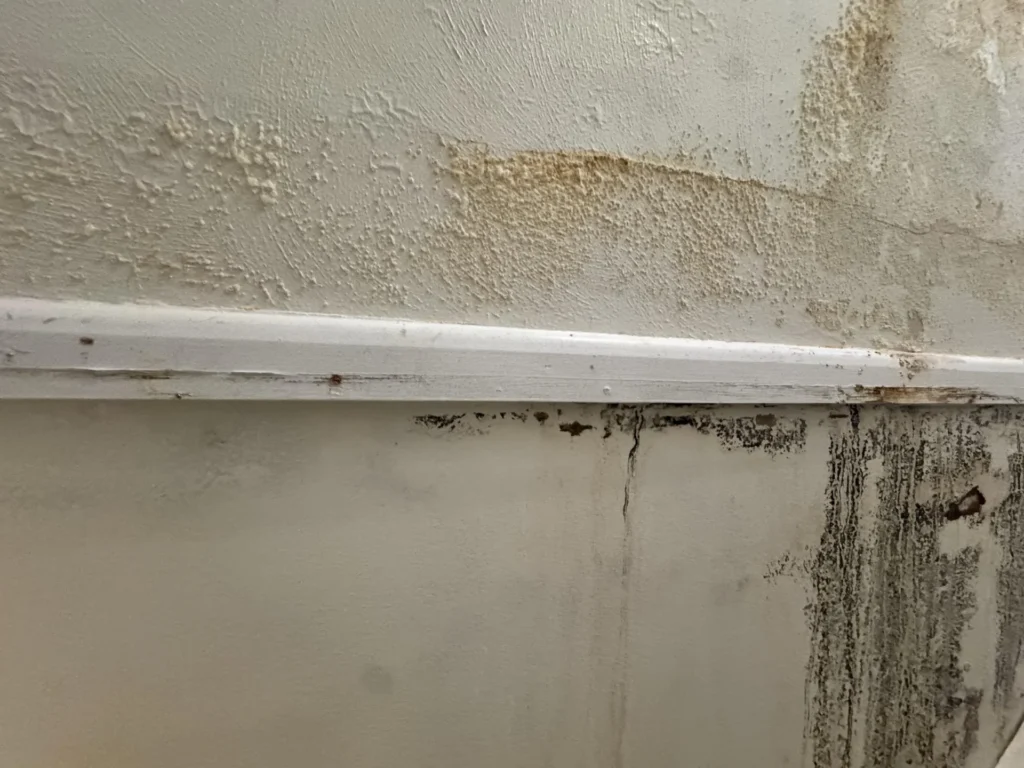
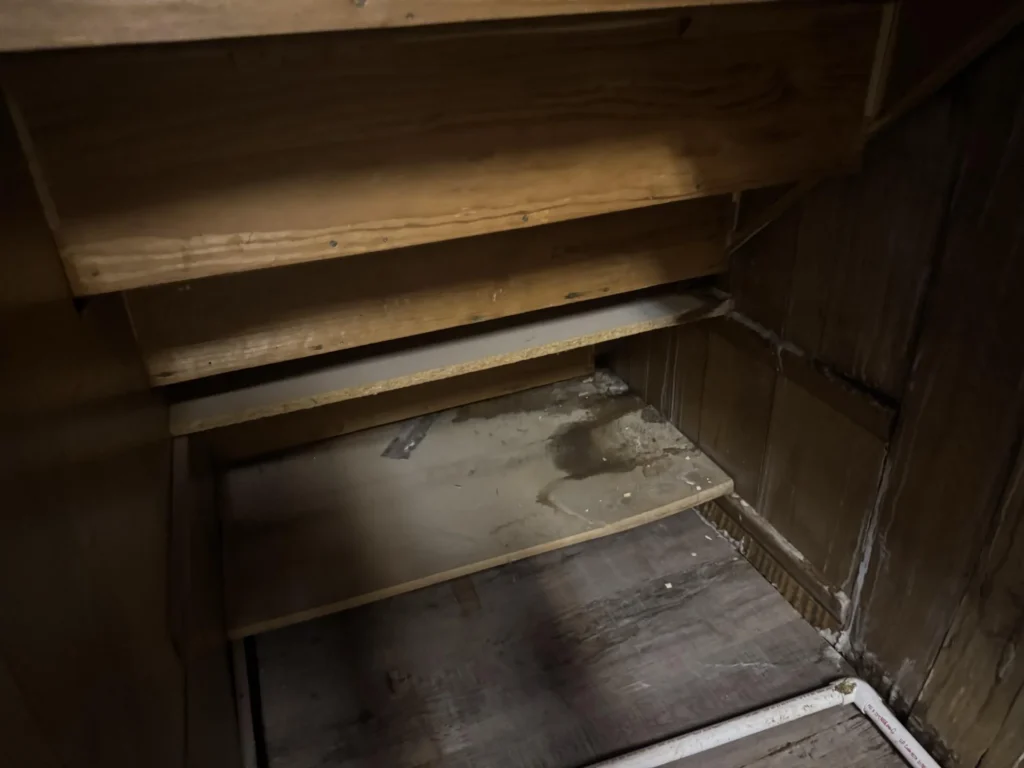
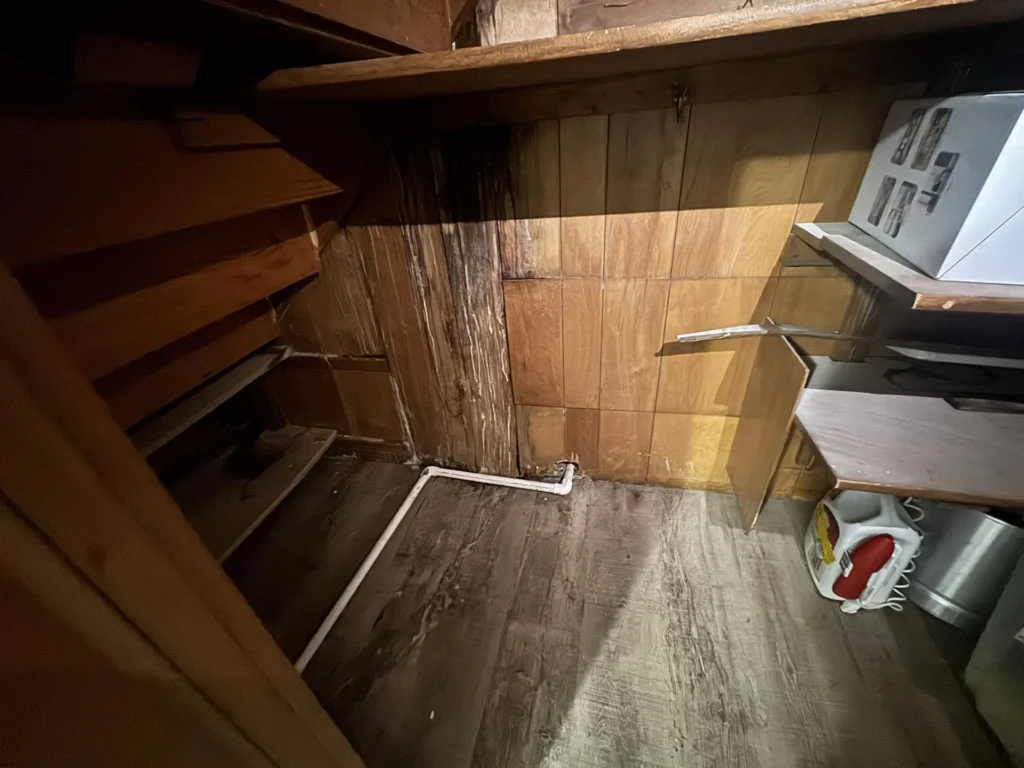
A PVC supply pipe running along the base of an enclosed under-stair storage cavity in this Cincinnati, OH home's finished basement developed a slow leak that went completely undetected — allowing water to saturate the surrounding plywood wall paneling, wick upward through the wood grain, and establish extensive black mold colonies across the full height of the under-stair enclosure walls before the damage was discovered; by the time H20 Restoration was called, the moisture had also migrated up through the stairwell structure, producing large brown water stains on the stairwell ceiling and drywall and triggering secondary mold growth below the chair rail on both stairwell walls — damage that had visibly been accumulating for months above the first-floor stair landing.
What appeared to be a localized under-stair issue was actually a multi-zone mold and moisture event. The leak had colonized the full height of the enclosed wood paneling in the under-stair cavity, traveled upward into the finished stairwell drywall, and stained the stairwell ceiling — extending the remediation scope well beyond the basement and into the first-floor stairwell corridor.
JOB DETAILS
- Cause of loss
- Water category
- Total affected area
- Spaces affected
- Materials affected
- Contents aMold discoveredpack-out
- Insurance support
Affected Spaces — From Floor Plan
- Recreation room
- Laundry room
- Electrical room
- Under-stair room
- Stairwell (to 1st floor)
- Total
DRYING EQUIPMENT DEPLOYED
HEPA air scrubbers
LGR dehumidifiers
Low-profile air movers
Antimicrobial fogger
Negative air pressure containment
Thermal imaging camera
Moisture meters
Mold test swabs
PPE / full containment setup
JOB SITE IMAGES
A CLOSER LOOK AT THE DAMAGE
Our process
Work completed
1
Full Assessment — Source Identification & Scope Mapping
Upon arrival, the team identified the active pipe leak at the base of the under-stair enclosure and isolated it. Thermal imaging and moisture meters were used to map the full extent of saturation — confirming that moisture had migrated vertically up the enclosed wall cavity and through the stairwell framing into the drywall above. The scope was formally extended to include the stairwell corridor up to the first-floor landing.
2
Containment Setup — Negative Air Pressure & HEPA Filtration
Given the extent of mold growth and the connection between the basement and the living floors via the stairwell, full negative air pressure containment was established around the affected areas. HEPA air scrubbers were deployed to prevent cross-contamination during demolition and remediation. All HVAC registers in the basement were sealed.
3
Mold Remediation — Wood Paneling, Framing & Stairwell Drywall
All mold-colonized plywood wall paneling in the under-stair enclosure and adjacent rec room wall sections was removed and bagged for disposal. Affected structural framing members were HEPA-vacuumed, wire-brushed, treated with EPA-registered antimicrobial solution, and encapsulated. Mold-affected drywall sections in the stairwell — including the stained ceiling area — were cut out and removed, and the stair-wall surfaces below the chair rail were treated and fogged.
4
Structural Drying — Basement & Stairwell Cavity
Low-profile air movers and LGR dehumidifiers were placed at strategic positions across all four basement spaces and inside the open stairwell cavity. Daily moisture readings were logged across all drying points until every surface reached dry standard. The under-stair cavity and stairwell framing were given extended drying time given the depth of saturation prior to treatment.
5
Contents Assessment & Documentation
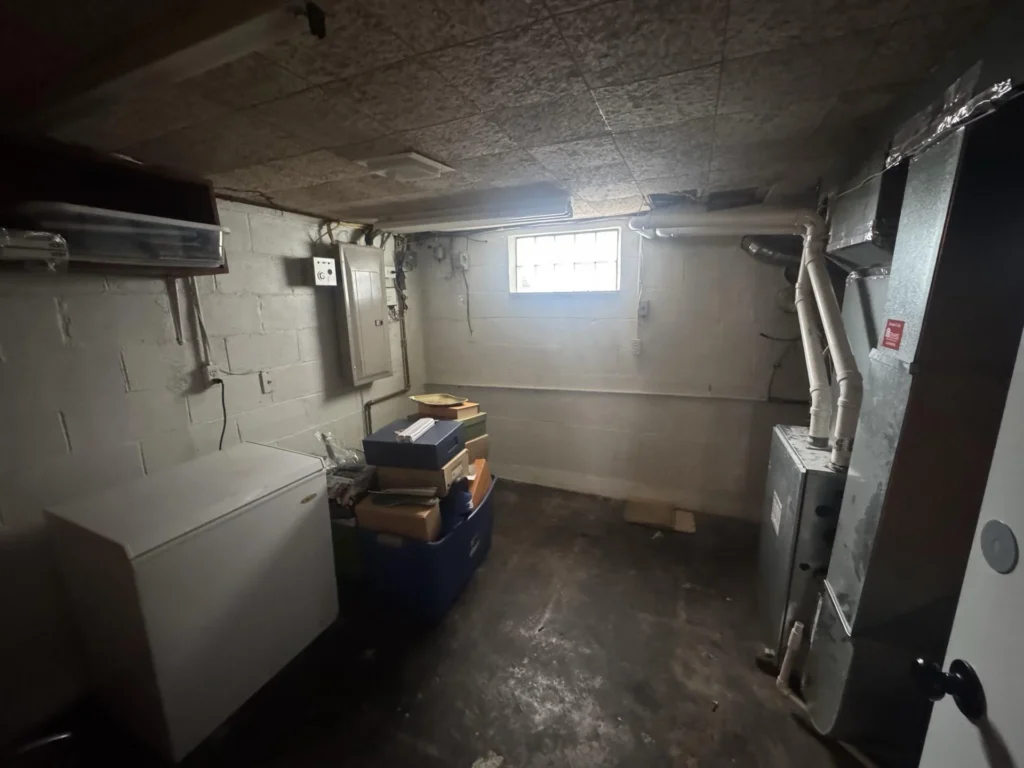
Contents in the under-stair storage room, electrical room, and adjacent rec room areas were documented and assessed for loss. Items in the under-stair cavity were directly affected by the mold environment. All at-risk contents were photographed, inventoried, and documented for the insurance claim. Contents at floor level in the rec room were assessed for secondary moisture exposure.
6
Daily Monitoring & Full Insurance Documentation
Moisture readings were logged at every drying station across the full scope daily. A complete before-and-after photo record, moisture mapping report, mold remediation protocol, and itemized scope of work were compiled and submitted to the insurance carrier. The expanded stairwell scope — including ceiling staining and wall mold — was fully documented to ensure coverage beyond the initial reported loss area.

"We knew there was some kind of smell coming from the basement but I honestly thought it was just the older paneling down there. When H2O came out and opened up the under-stair closet, I couldn't believe what was in there. Black mold everywhere, top to bottom. They explained exactly what needed to happen, set up the containment the same day, and handled everything with our insurance — they even caught that the damage had gone all the way up the stairwell, which we had no idea about. It was a stressful situation but they were really straightforward and got it done."
Mold or Water Damage in Greater Cincinnati or Northern Kentucky?
H2O Restoration responds 24/7 across the region — on site in 59 minutes or less. We find every affected space, document it all, and handle the insurance so you don't have to.
CALL: (513) 909-6540