
WATER DAMAGE
MOLD REMEDIATION
RESIDENTIAL
CATEGORY 2
Hidden Pipe Leak Grows Cincinnati, OH
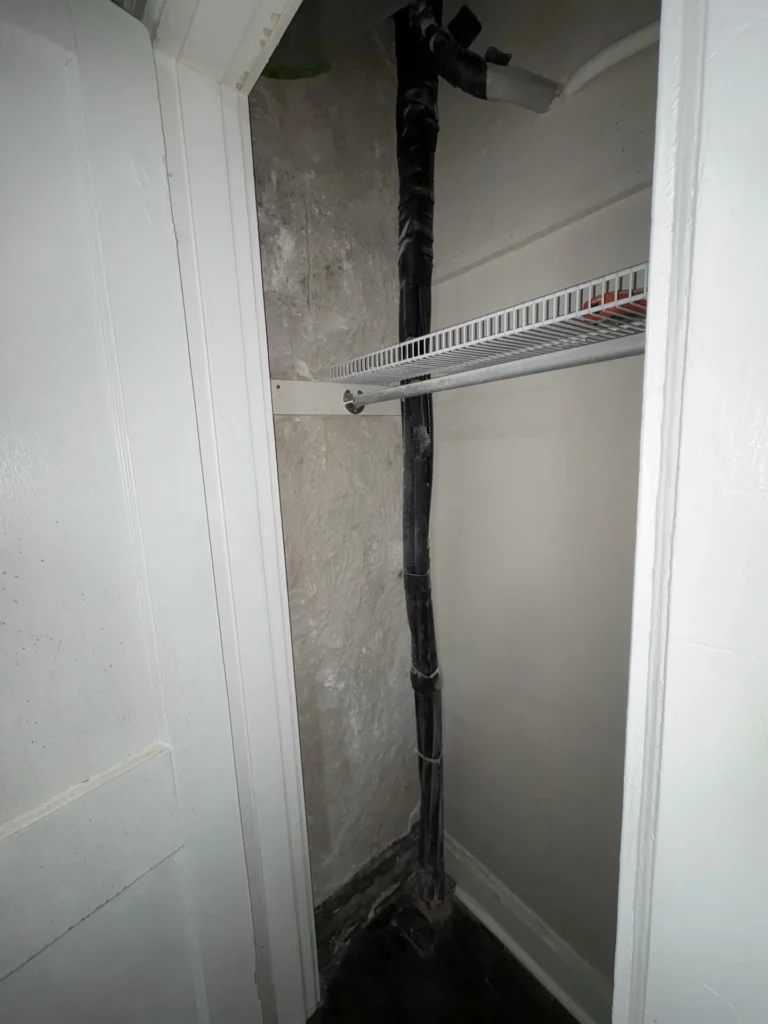
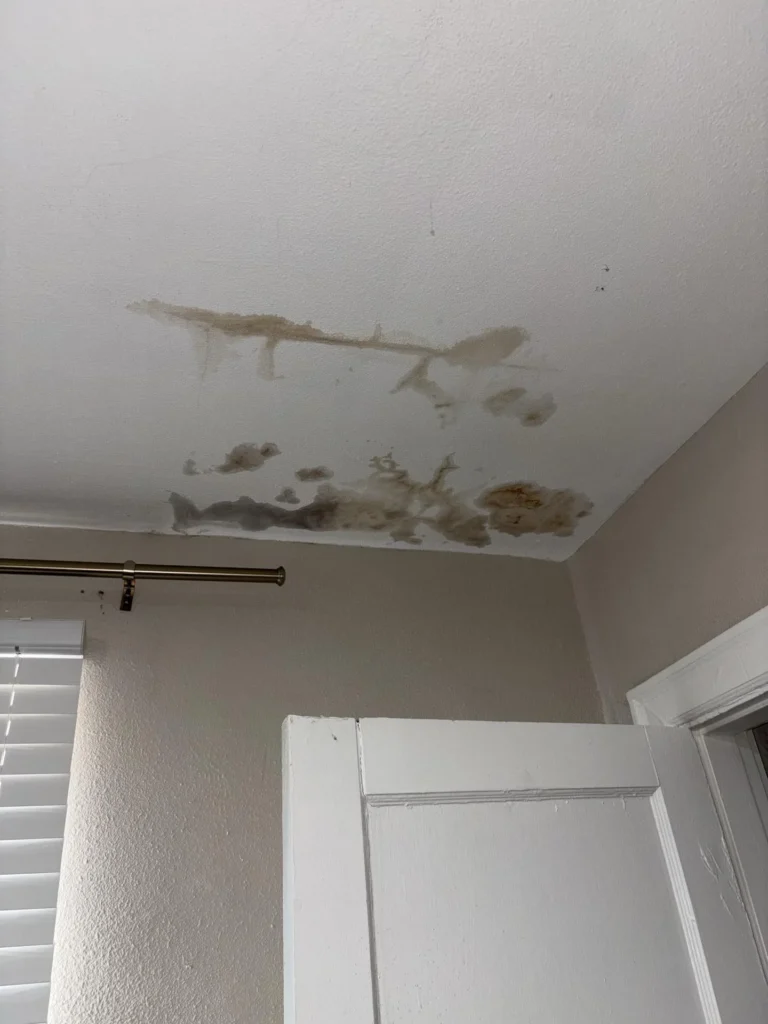
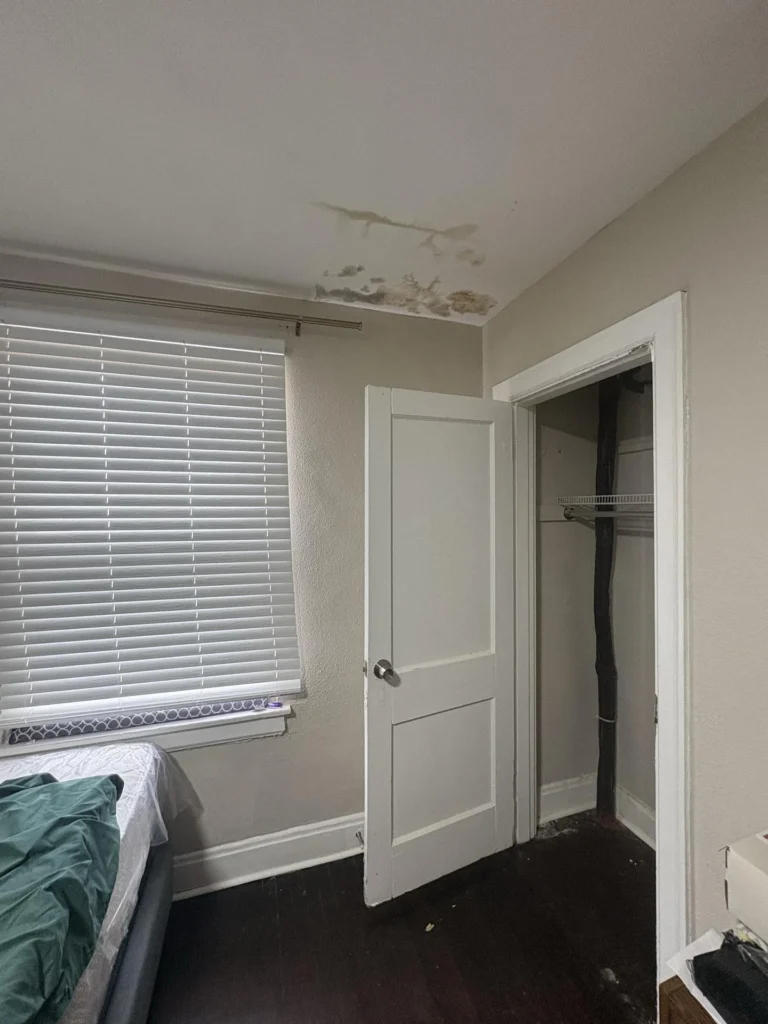
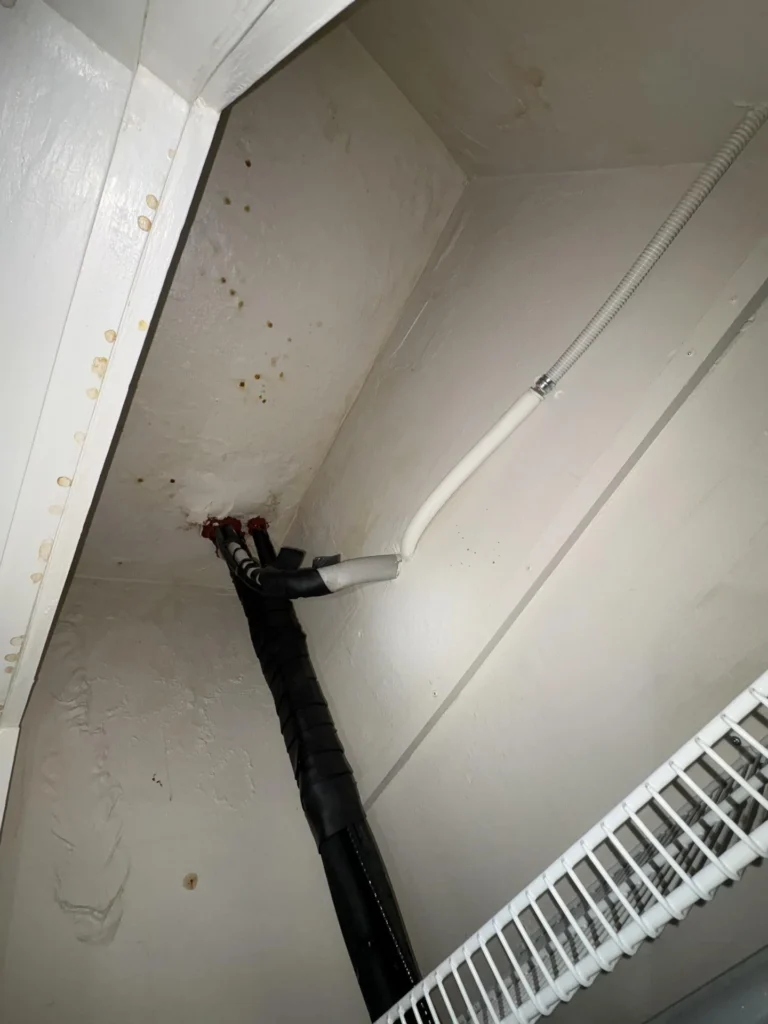
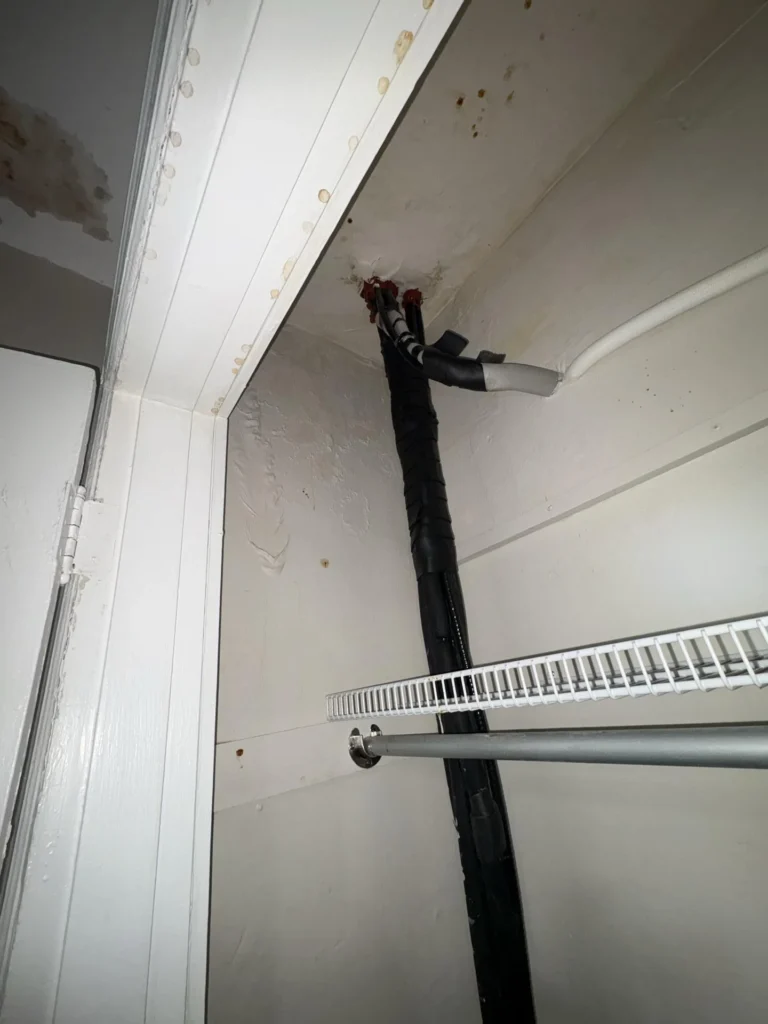
A slow leak at an insulated pipe chase running through the bedroom closet of this Chalfonte Place, Cincinnati, OH home went undetected long enough to produce significant mold growth inside the ceiling framing — appearing first as ceiling staining in the bedroom, and revealing heavily mold-damaged joists and structural framing once drywall was removed. H2O Restoration responded within 59 minutes.
LOCATION
Cincinnati, OH
Total Affected Are
205 sq ft
CAUSE OF LOSS
Pipe Chase Leak
Mold Confirmed
Yes — framing cavity
RESPONSE TIME
Within 59 minutes
PROJECT OVERVIEW
WHAT HAPPENED
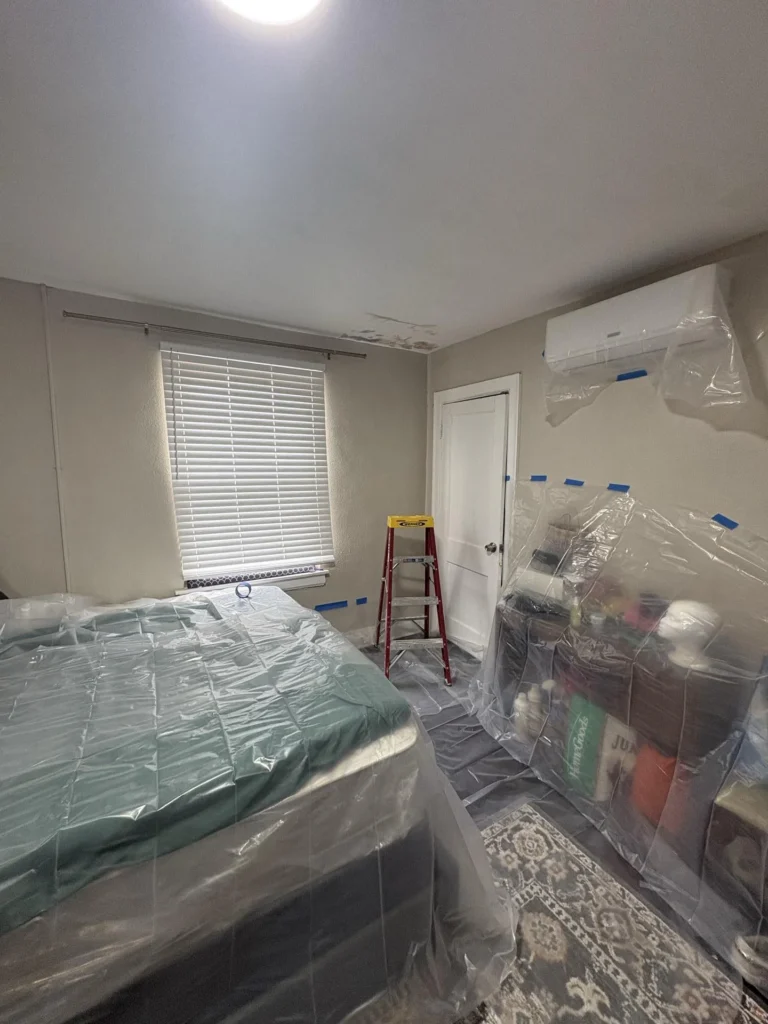
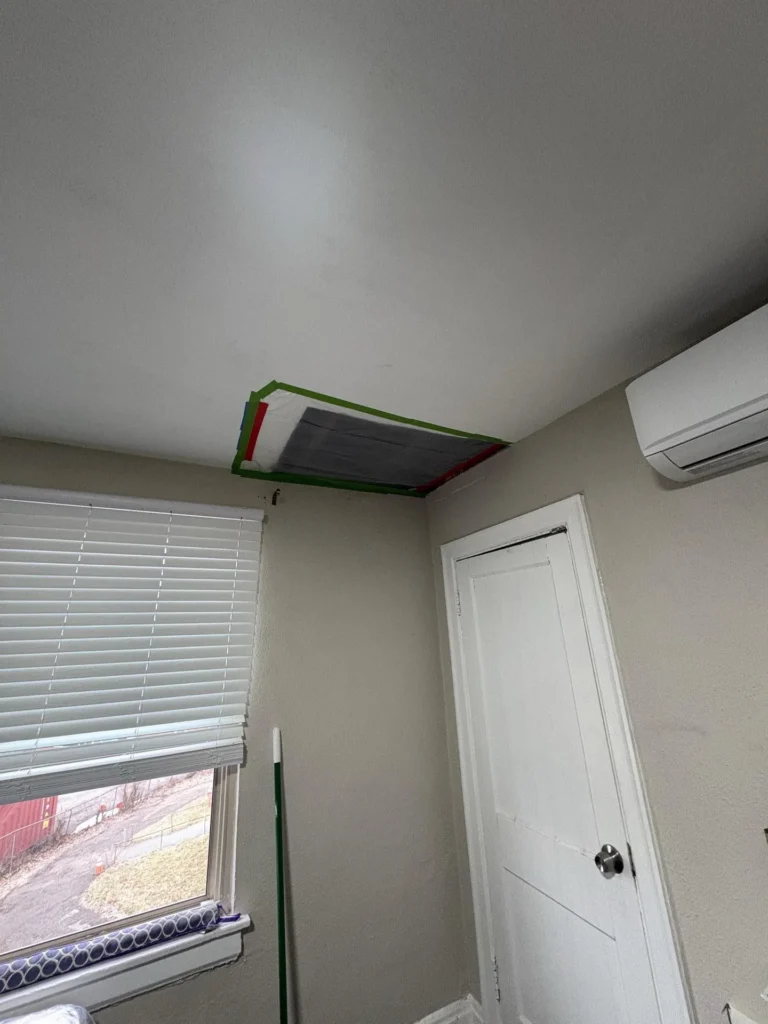
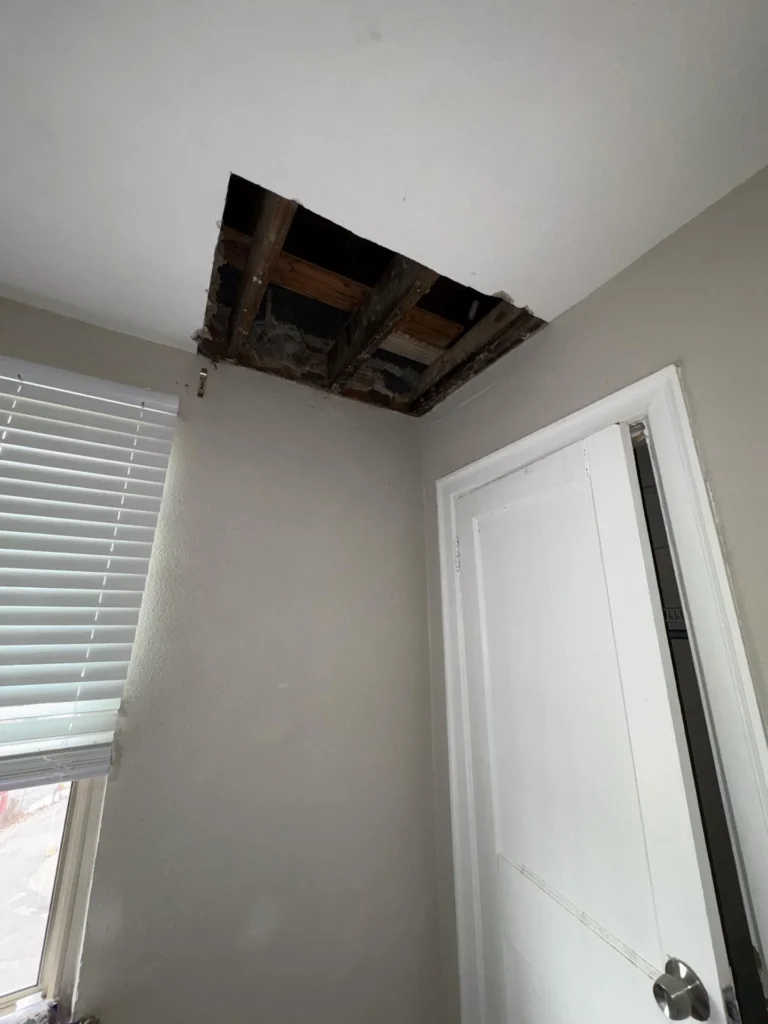
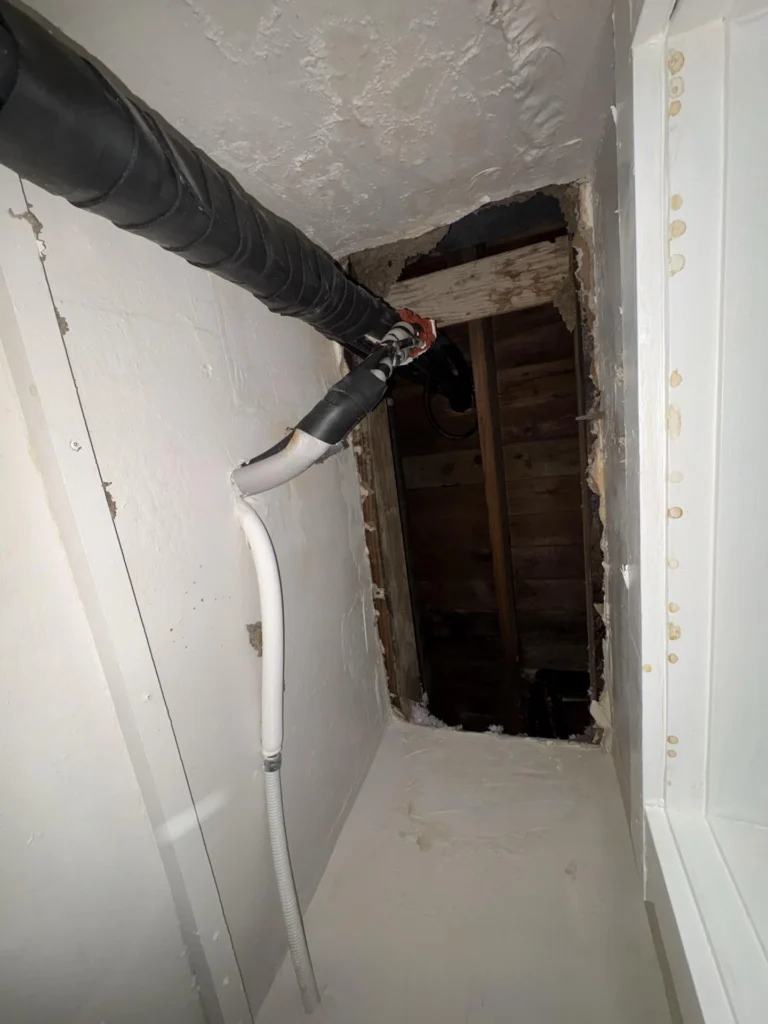
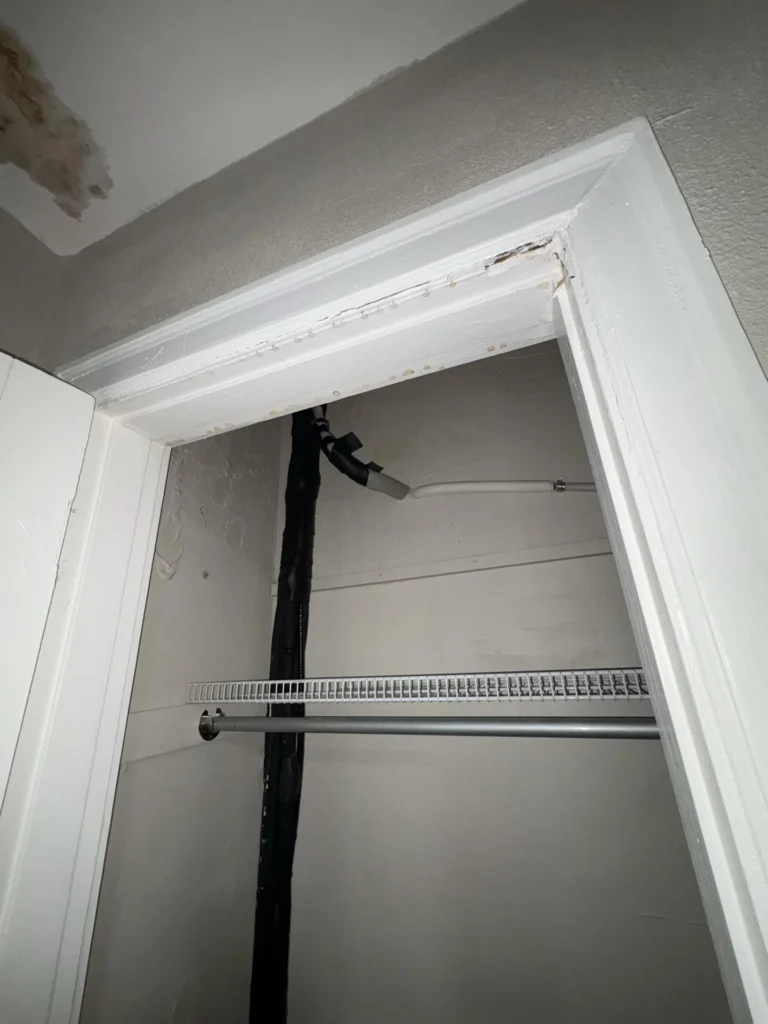
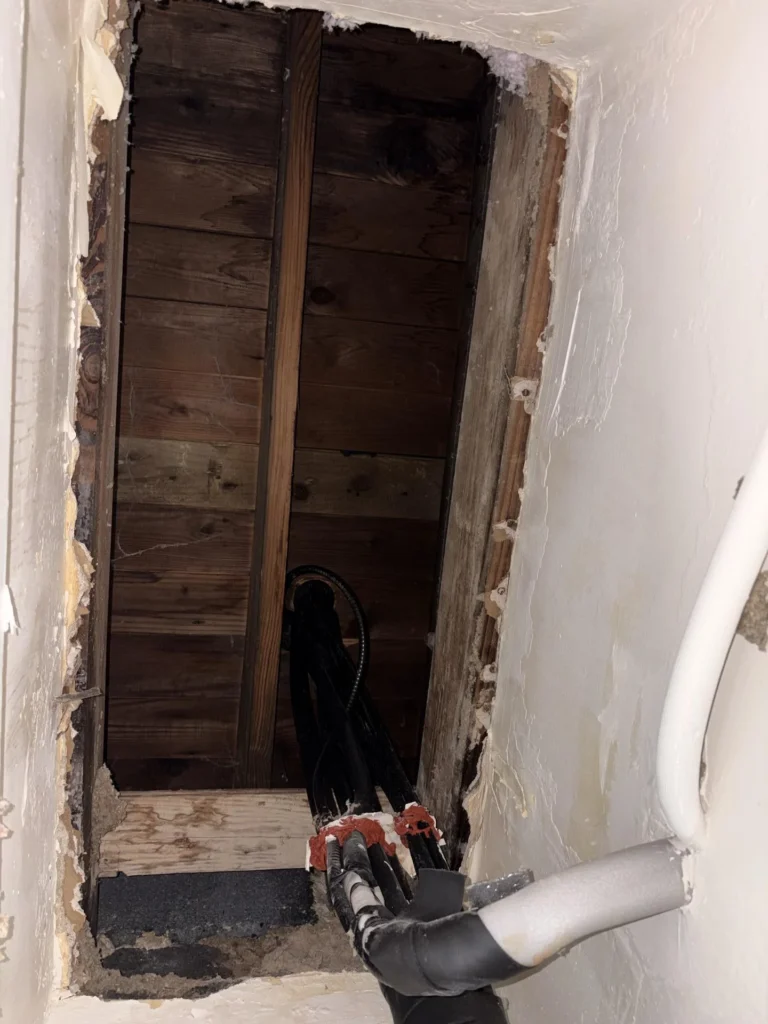
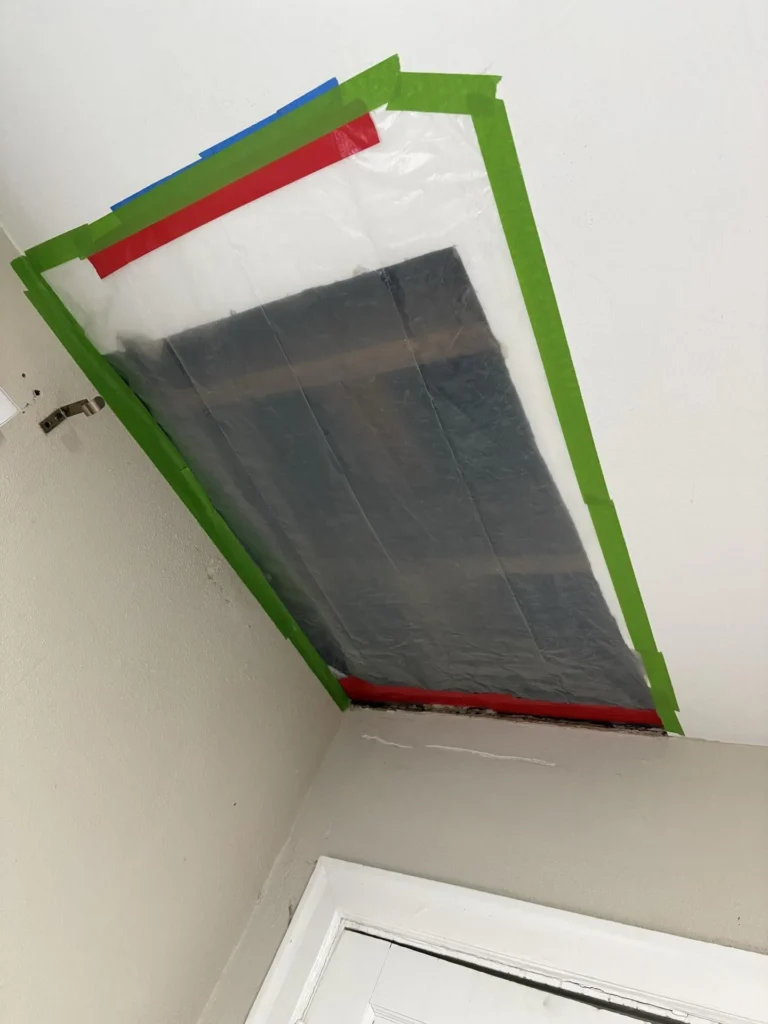
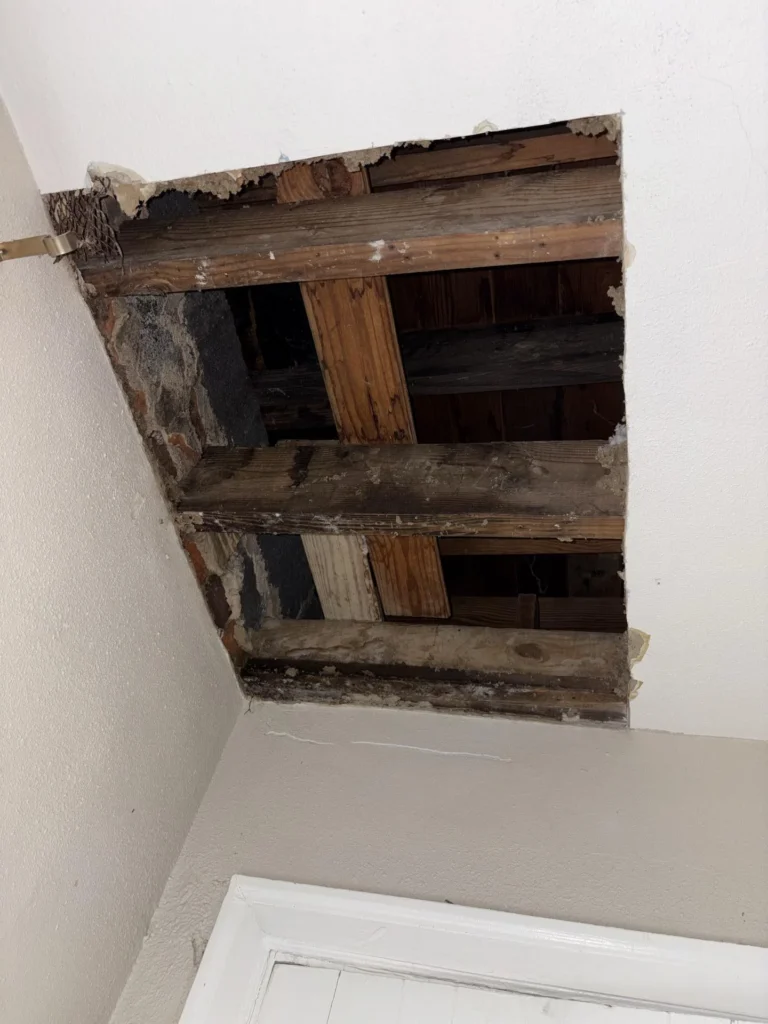
A slow leak at an insulated pipe chase running through the bedroom closet of this Chalfonte Place home had been weeping moisture into the ceiling framing cavity long enough to produce visible mold growth on the joists and structural wood — a problem that only became apparent from below as large brown-and-dark staining spread across the bedroom ceiling near the closet corner. Once saturated ceiling drywall was removed, the scope expanded significantly: exposed framing showed dark mold colonization across multiple joists and along the closet back wall, with the closet itself showing moisture-damaged surfaces from the ceiling pipe penetration all the way down to the baseboard. All bedroom contents were fully protected with plastic sheeting on arrival, and containment barriers were installed over both ceiling openings before any remediation work began.
Mold confirmed on this job: removal of the bedroom ceiling drywall revealed active mold growth on structural framing — joists and sheathing showing visible black and dark mold colonization consistent with a prolonged slow moisture event. Full IICRC S520 mold remediation protocol was required before any reconstruction could begin.
JOB DETAILS
- Cause of loss
- Water category
- Mold confirmed
- Total affected area
- Contents at risk
- Contents protected
- Insurance support
Affected Spaces — From Floor Plan
- Bedroom
- Bedroom closet
- Ceiling framing cavity
- Closet walls
- Total loss footprint
DRYING EQUIPMENT DEPLOYED
Containment barriers (poly sheeting)
Negative air / air scrubber
HEPA vacuuming
EPA-registered fungicide
LGR dehumidifiers
Axial air movers
Thermal imaging camera
Moisture meters
Full PPE — mold protocol
JOB SITE IMAGES
A CLOSER LOOK AT THE DAMAGE


Our process
Work completed
1
Emergency response and contents protection — on site within 59 minutes
Crew arrived to actively expanding ceiling staining in the bedroom. The insulated pipe chase in the closet was identified as the moisture source and isolated. Before any demolition began, all bedroom contents — bed, furniture, and personal items — were covered in heavy plastic sheeting with floor protection laid throughout. The wall-mounted mini-split unit was also wrapped to protect it from remediation dust.
2
Containment setup — bedroom ceiling and closet openings
Full poly sheeting containment barriers were installed over both the bedroom ceiling area and the closet ceiling opening before any drywall removal occurred. All edges were tape-sealed. A negative air machine with HEPA filtration was deployed inside containment to prevent mold spores from migrating to unaffected areas of the home during demolition and remediation.
3
Controlled demolition and mold assessment
Saturated ceiling drywall was removed from the bedroom corner and closet ceiling under full containment. Exposed framing revealed significant mold colonization — dark mold growth across multiple ceiling joists and along the closet framing, consistent with a prolonged slow leak. The full extent of mold-affected structural wood was mapped and documented photographically for the insurance claim and remediation scope of work.
4
Mold remediation — structural framing treatment
All mold-affected framing surfaces were HEPA-vacuumed, wire-brushed where indicated, and treated with EPA-registered fungicide per IICRC S520 mold remediation standards. The closet back wall — showing moisture damage and surface staining from the ceiling pipe penetration down to the baseboard — was treated and dried independently. Clearance readings were taken to confirm remediation was complete before any reconstruction was initiated.
5
Structural drying — open cavity and daily monitoring
LGR dehumidifiers and axial air movers were deployed inside the open ceiling cavity and throughout the bedroom to dry exposed framing and remaining structure to dry standard. Daily moisture readings were logged at the joists, top plate, closet framing, and adjacent wall assemblies until all monitored points cleared. No reconstruction began until all readings were confirmed stable.
6
Insurance documentation — water damage and mold scope combined
A complete documentation package was submitted to the carrier: before-and-after photo sets for the bedroom and closet, thermal images confirming moisture extent, daily moisture logs, a full mold remediation scope covering framing treatment and demolished materials, and an adjuster-ready reconstruction estimate covering ceiling drywall, closet wall repair, texture, and paint — all in a single organized claim file.
H2O Restoration handles both mitigation and full reconstruction — including framing repair or replacement, ceiling drywall installation, closet wall restoration, texture matching, and paint. Mold remediation and rebuild managed by one team, from first call through final walkthrough.

"I noticed some staining on my bedroom ceiling and honestly thought it was just a minor leak that needed a quick patch. H2O came out and within like an hour they were telling me there was mold growing inside the ceiling — I had no idea it had gotten that bad. They were really thorough, wrapped up all my furniture before they started tearing into anything, and walked me through every step of what they were doing and why. The containment stuff looked very official, which honestly gave me peace of mind that they knew what they were doing. Everything got handled and documented for my insurance. Glad I didn't just try to slap some paint over it."
Ceiling Stains or Suspected Mold in Greater Cincinnati?
H2O Restoration responds 24/7 across Greater Cincinnati, Northern Kentucky, and surrounding communities — on site in 59 minutes or less. We find what's hiding behind the surface, document everything, and handle the insurance so you don't have to.
CALL: (513) 909-6540