
WATER DAMAGE
RESIDENTIAL
CATEGORY 1
Roof Intrusion
Roof Leak Collapses Cincinnati, OH
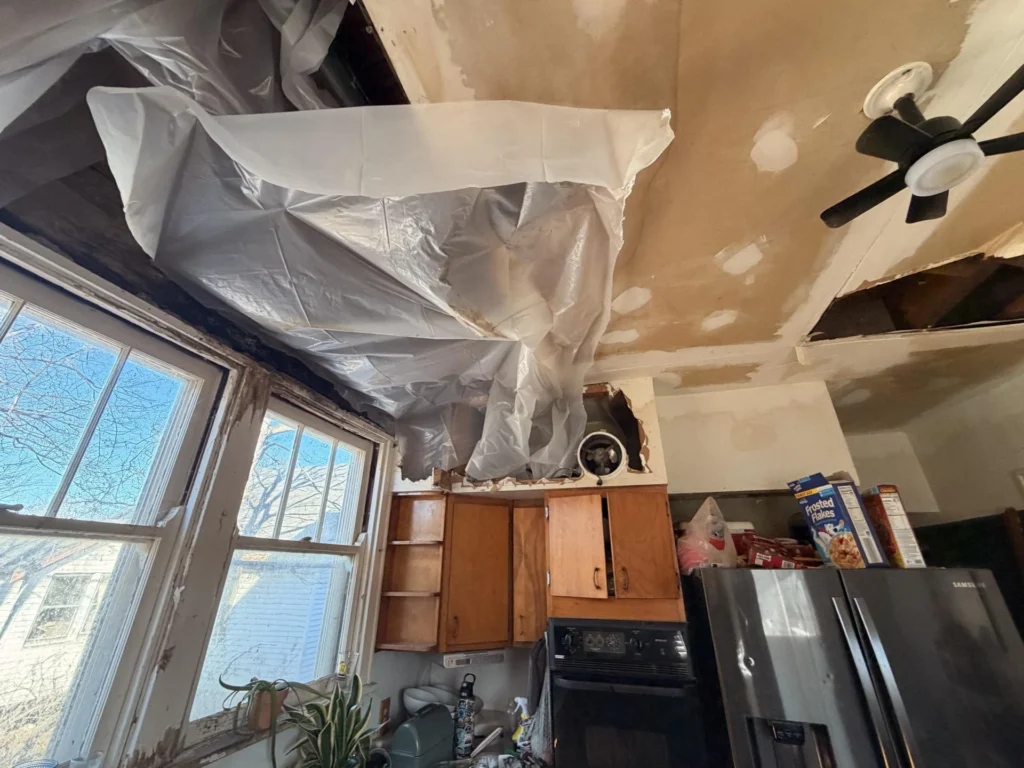
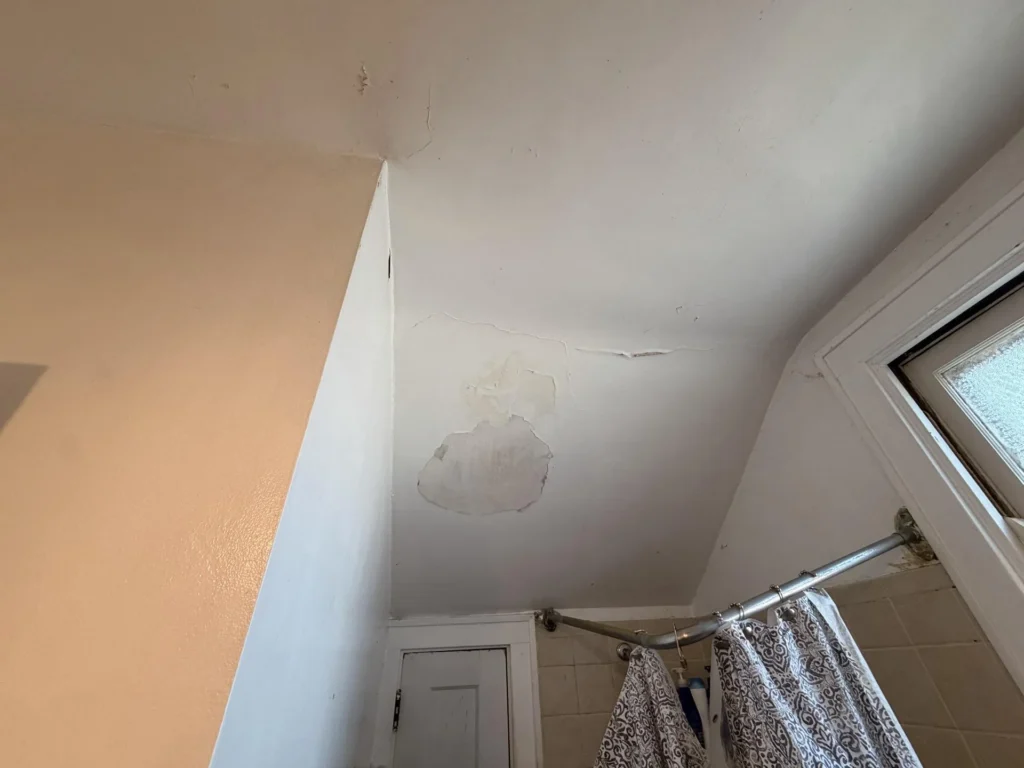
A prolonged roof intrusion in this older Ratterman Avenue, Cincinnati, OH home allowed water to accumulate inside the ceiling cavity above the bathroom — saturating the historic plaster and lath until it peeled and fell — then migrating through the floor assembly to collapse large sections of the kitchen ceiling directly below, flooding the hardwood kitchen floor. H2O Restoration responded within 59 minutes.
LOCATION
Cincinnati, OH
Total Affected Area
247 sq ft
CAUSE OF LOSS
Roof Intrusion
Spaces Affected
2 — see breakdown
RESPONSE TIME
Within 59 minutes
PROJECT OVERVIEW
WHAT HAPPENED
A roof intrusion above this older Ratterman Avenue home had been channeling water into the ceiling cavity long enough to fully saturate the historic plaster-and-lath bathroom ceiling — which had begun peeling and falling away in large sections — while the water accumulating in the floor/ceiling assembly between floors found its way down into the kitchen directly below, where it soaked through the plaster ceiling and caused large-scale collapse, exposing the structural framing and dropping water-saturated debris across the kitchen cabinets and hardwood floor. Plastic sheeting had already been draped over the upper cabinets by the homeowner in an attempt to protect against the falling ceiling. The kitchen hardwood floor was saturated from above, and the bathroom above showed moisture damage at the floor tile threshold where water had begun migrating laterally out of the bathroom space as well.
The kitchen ceiling collapse was the visible symptom — but the source was a roof intrusion one floor above, pooling in the ceiling cavity of the bathroom before breaking through. In an older plaster-and-lath home like this, ceiling collapse can happen quickly once water saturates the heavy plaster layer. The true scope extended from the roof entry point through both ceiling assemblies across two floors.
JOB DETAILS
- Cause of loss
- Water category
- Water class
- Total affected area
- Ceiling type
- Floor affected
- Insurance support
Affected Spaces — From Floor Plans
- Bathroom (upper floor)
- Eat-in kitchen (lower floor)
- Kitchen ceiling
- Kitchen hardwood floor
- Total loss footprint
DRYEQUIPMENT DEPLOYED
Portable extraction units
LGR dehumidifiers
Axial air movers
Subfloor drying system
Moisture meters
Thermal imaging camera
Debris removal — collapsed ceiling
Containment sheeting
JOB SITE IMAGES
A CLOSER LOOK AT THE DAMAGE





Our process
Work completed
1
Emergency response — on site within 59 minutes
Crew arrived to find ceiling collapse already in progress in the kitchen, with sections of plaster-and-lath still sagging and at risk of further fall. The roof entry point was identified as the source. Thermal imaging was deployed across both the bathroom ceiling above and the kitchen ceiling below to map the full extent of water saturation in both ceiling assemblies before any debris removal began. All unstable ceiling material was assessed for immediate safety risk.
2
Collapsed ceiling debris removal — kitchen
Fallen and actively falling plaster-and-lath was safely removed from the kitchen, clearing debris from the cabinet surfaces and floor. Any remaining ceiling material confirmed saturated and structurally unsound was carefully taken down to prevent further collapse during the drying process. The kitchen hardwood floor was cleared of debris and water-extracted to begin moisture stabilization.
3
Water extraction — kitchen floor and bathroom
Portable extraction units removed water from the saturated kitchen hardwood floor, where water had been dropping from the ceiling cavity above. The bathroom floor threshold area — where moisture had begun wicking out of the bathroom tile onto the adjacent hardwood — was also extracted and treated. The saturated plaster remaining in the bathroom ceiling was assessed; sections beyond salvage were removed to prevent continued moisture release into the structure.
4
Structural drying — floor/ceiling assembly across both floors
LGR dehumidifiers and axial air movers were deployed in both the kitchen and the bathroom above, targeting the exposed floor/ceiling assembly from both sides. The subfloor above the kitchen — which had absorbed water from the roof intrusion traveling through the bathroom floor — was addressed with a subfloor drying system. Daily moisture readings tracked framing, subfloor, and remaining plaster/lath in both rooms until all monitored points reached dry standard.
5
Insurance documentation — roof source + two-floor scope
A complete documentation package was submitted to the carrier including thermal images confirming moisture in both ceiling assemblies, before-and-after photography of the bathroom and kitchen, daily moisture logs, a debris removal scope for the collapsed kitchen ceiling, and an adjuster-ready reconstruction estimate covering kitchen ceiling replacement, bathroom plaster ceiling repair, hardwood floor assessment and restoration, and coordination with a roofing contractor for the entry point repair.
H2O Restoration handles both mitigation and full reconstruction — including historic plaster ceiling repair or replacement, kitchen ceiling reinstallation, hardwood floor restoration, and coordination with roofing contractors to ensure the source is addressed before reconstruction begins. One team from the first call through the final walkthrough.

"Part of my kitchen ceiling had already come down by the time I called and the bathroom upstairs was a mess too. H2O was there quickly and I was relieved because I honestly didn't know what to do — pieces were still falling. They cleared everything out safely, got equipment running, and explained exactly what happened and where the water was actually coming from. I hadn't connected the bathroom damage upstairs to the kitchen ceiling below but apparently it was all the same problem. They handled the whole thing and my insurance covered both floors because of the way they documented it. Really professional operation."
Roof Leak or Ceiling Collapse in Greater Cincinnati?
H2O Restoration responds 24/7 across Greater Cincinnati, Northern Kentucky, and surrounding communities — on site in 59 minutes or less. We find how far the water traveled, document everything across both floors, and handle the insurance so you don't have to.
CALL: (513) 909-6540